Daily Habit Tracker: What Counts as Done Today (and What One Day Does to the Month)
Daily habit tracker setup in 10 minutes: define done, check off once a day, and see how 5 missed days still read 84% in a worked 31-day month.
By Ultimate Habit Tracker by Cosmo Suite · Editorial policy
Published · 10 min read
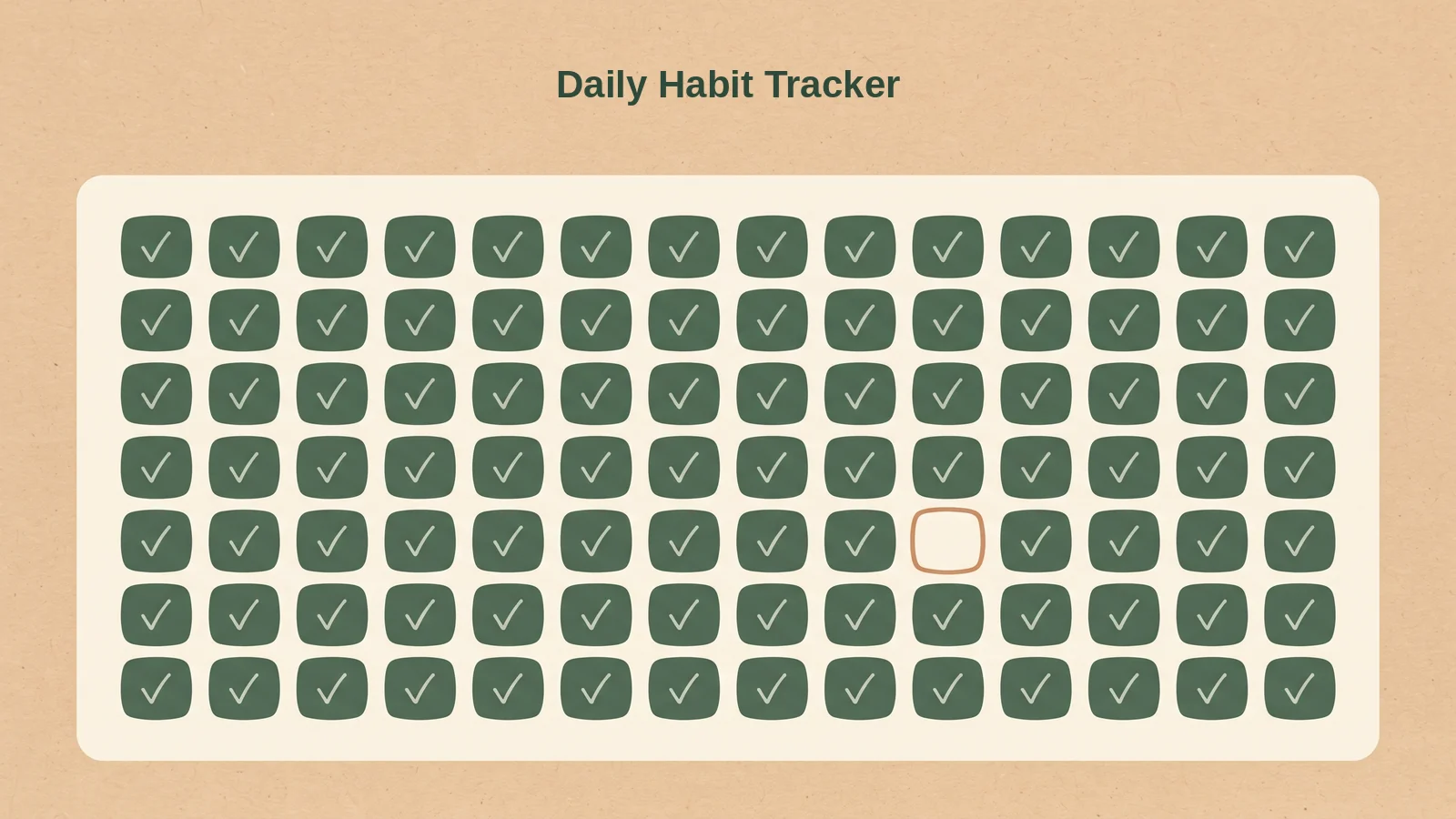
A daily habit tracker is a record where you mark each habit once a day, so most of the work is deciding what a mark means. However, most guides stop at "pick a few habits and check them off". They skip the two questions that decide whether you are still marking in March: what counts as done today, and what one bad day does to the total.
This guide answers both questions. In short: define a minimum version of each habit, mark everything at one fixed moment, and read the month as a percentage. A habit tracker spreadsheet with a daily checkbox grid does the arithmetic for you, and the rest of this page shows the setup and a worked month. If you are still choosing a format, our guide to a habit tracker spreadsheet covers the layout choices first.
What Counts as Done Today
A habit counts as done when you have completed the minimum version that you wrote down in advance, however modest it looks next to what you hoped to do. Without that rule every evening turns into a negotiation with yourself, and a negotiation about whether yesterday really counts is exactly where a tracker starts to feel like administrative work.
Write one line per habit before the day begins:
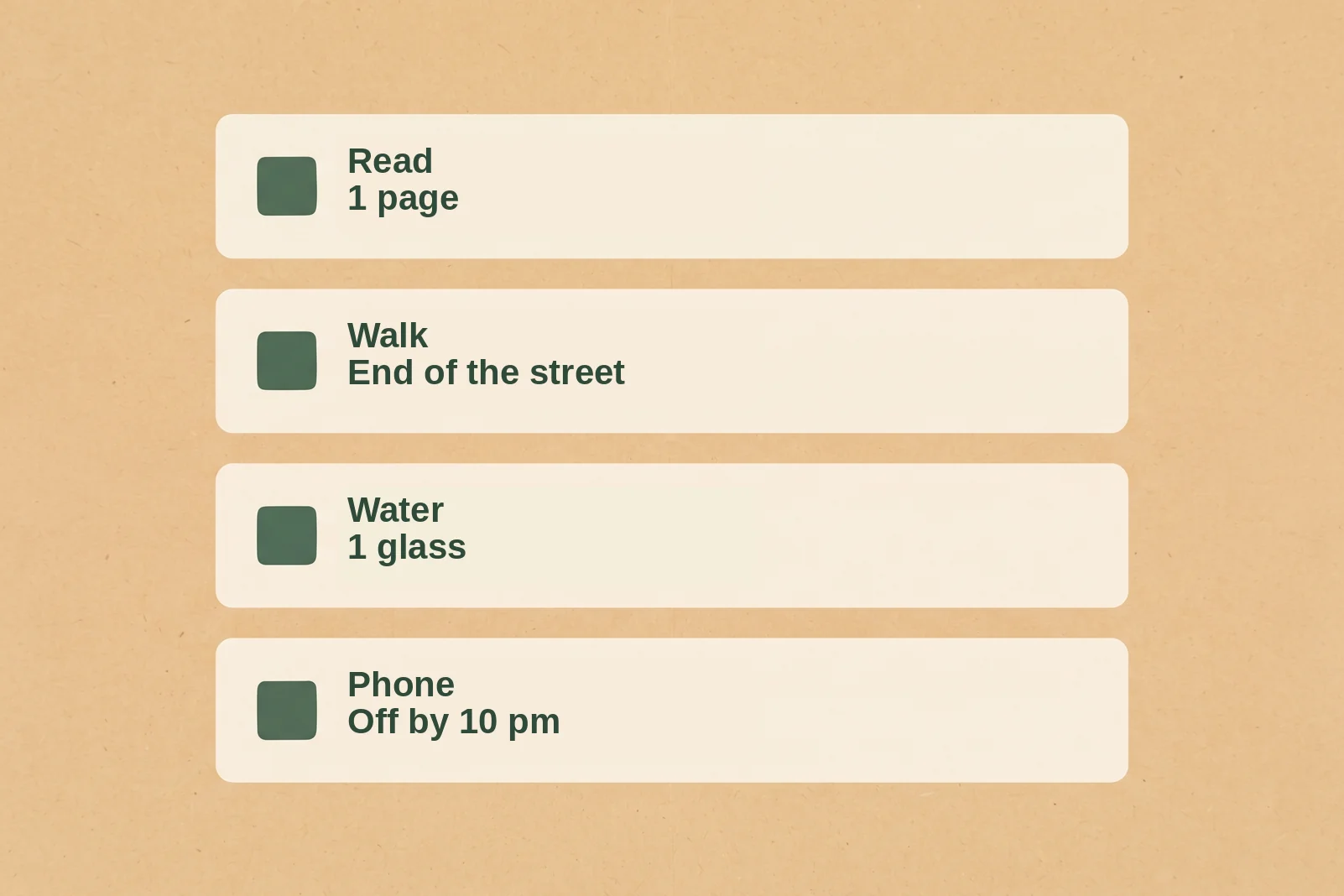
- Read: one page counts, ten pages is a good day.
- Walk: to the end of the street counts, 20 minutes is a good day.
- Water: one full glass with lunch counts.
- Phone: off the bedside table by 10 pm.
The minimum itself is the check-off. For example, anything above one page is a bonus you do not record. This keeps the box honest, because nobody can half-do a one-page habit, and it keeps the bar reasonable on the evening when you are exhausted and still want the record to stay intact. The research on repetition points in the same direction. In the Lally study at University College London, 96 volunteers repeated one new behavior once a day for 84 days, and a single missed day had little impact on later automaticity gains. In practice, a small check-off made today beats a big one planned for the weekend.
Pair each habit with something that already happens during a normal day, for instance after brushing your teeth or at the moment when you sit down for lunch. Our guide to if-then plans for habits explains that kind of cue in considerably more detail. Then add one more rule for the tracker itself, namely a single moment every day when you mark everything together. Evening works for most people, because the day is finished, the memory is still fresh, and nothing else is competing for those particular minutes.
Daily Habit Tracker Formats at a Glance
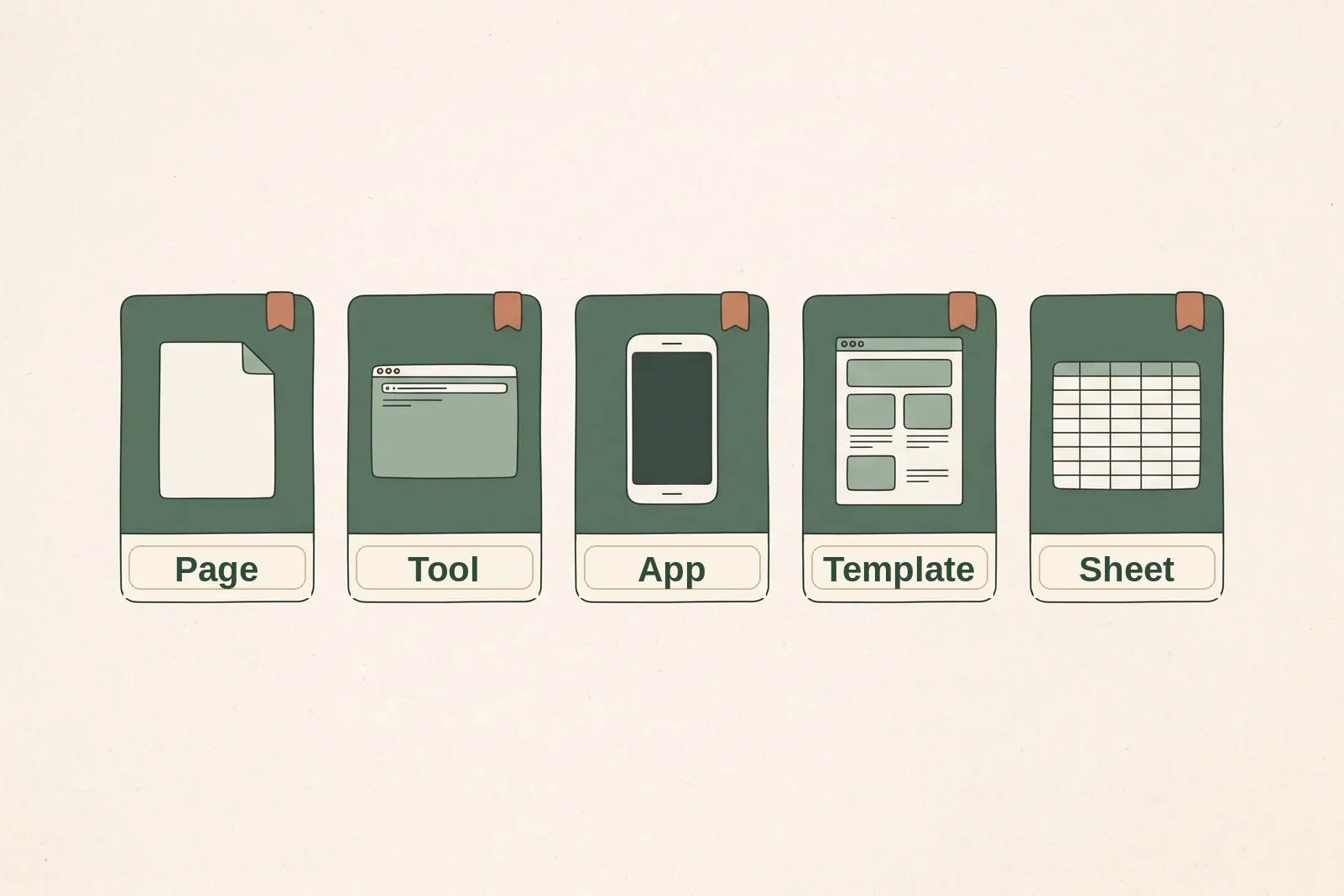
Paper, a free online tool, an application and a spreadsheet can all hold a daily check-off equally well. They differ mainly in where they break, so it helps to choose a format according to the place where your previous attempts fell apart.
| Format | What you get | Where it can break | Best for |
|---|---|---|---|
| Printed page | One sheet, no screen; Day Designer's free printable fits up to 19 habits a page | Totals are counted by hand | People who like pen and paper |
| Free online tool | Streaks, goals and a heatmap, no signup (Habi's tool, as listed on its page) | Your data sits with the tool | A quick trial |
| Habit app | Reminders and streaks on your phone | Some features may sit behind a subscription | People who want a nudge |
| Notion template | Daily, weekly and monthly views, as the Notion gallery describes them | You maintain the setup | People who already live in Notion |
| Spreadsheet | A file you own, with totals and percentages | Typing into cells, unless the layout is ready | People who want the whole month on one screen |
The pages that rank for this topic are mostly tools and app listings, which are a reasonable starting point when the only decision you are making is which application to install. The Google AI summary for the same search says to pick two to five habits, check them off each day, and not let one missed day stop you. However, it never explains what a missed day does to your numbers, and that missing explanation is the subject of the sections below.
Set Up the Daily Check-off in 10 Minutes
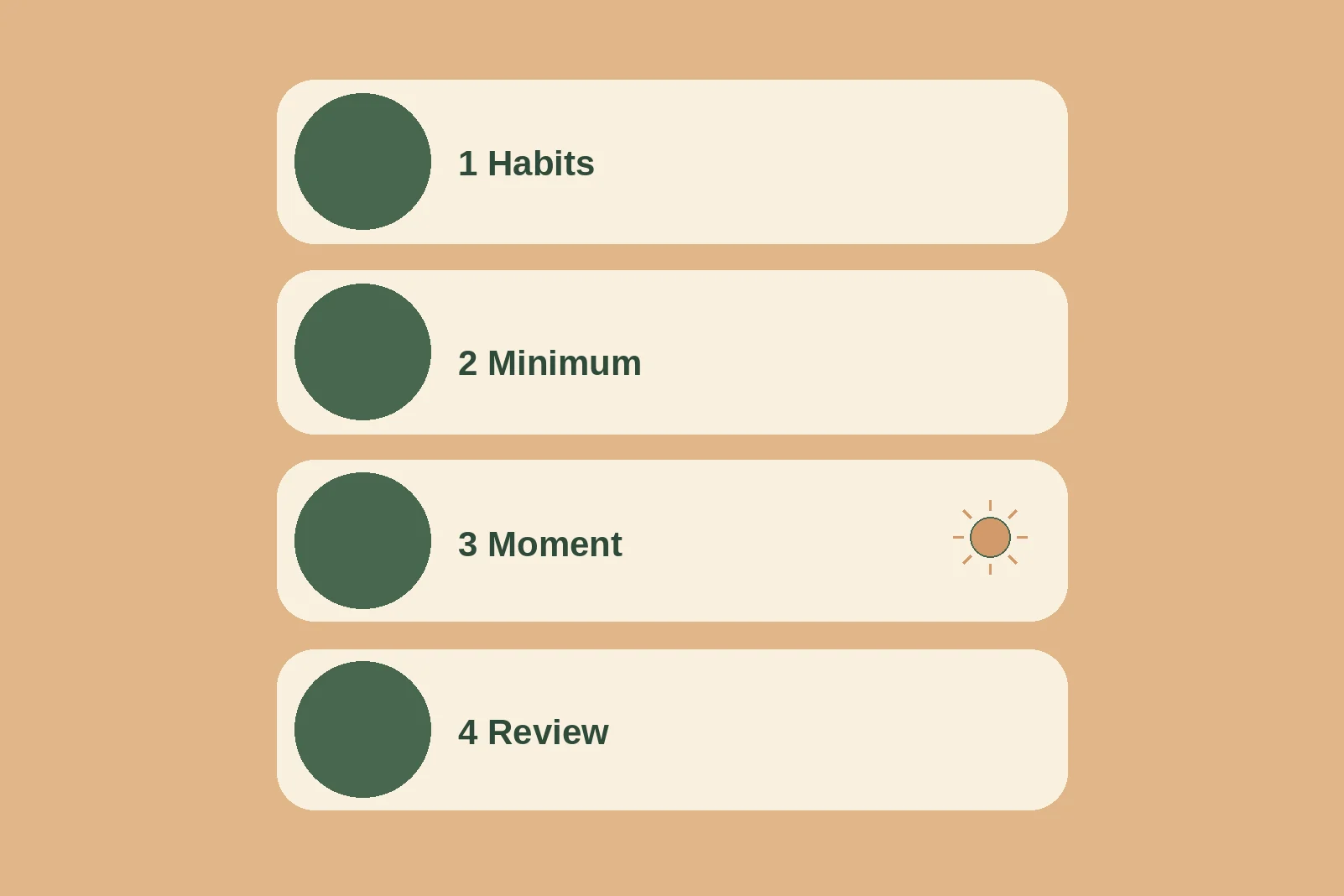
A daily tracker needs exactly four decisions, and it is easiest to make all of them once, before you check the first box.
- List three habits. Pick actions that you can realistically finish within a few minutes, and if you need suggestions, see our overview of what to track in a habit tracker.
- Write the minimum for each. Use one line per habit, as described above, because this sentence becomes your definition of done for the rest of the month.
- Choose the check-off moment. Select one time of day and keep it consistent, preferably next to something fixed and familiar, such as the end of dinner.
- Set the review. A single monthly look at the percentage is enough information to adjust the plan. A monthly habit tracker layout shows what to put on that page.
A 2016 meta-analysis covering 138 experimental studies found that monitoring goal progress promoted goal attainment, and more so when progress was physically recorded or reported publicly. So the act of recording progress is itself part of the method, and a one-minute evening routine is enough to capture the benefit.
Speed matters as well. Each individual check-off should take only a few seconds, because if marking a habit means typing a value, choosing a category or opening three separate screens, it will probably feel like a chore by the third week. A checkbox is the target. Therefore, choose a layout where one click is the whole action.
Daily, Weekdays or Three Times a Week: Pick the Denominator
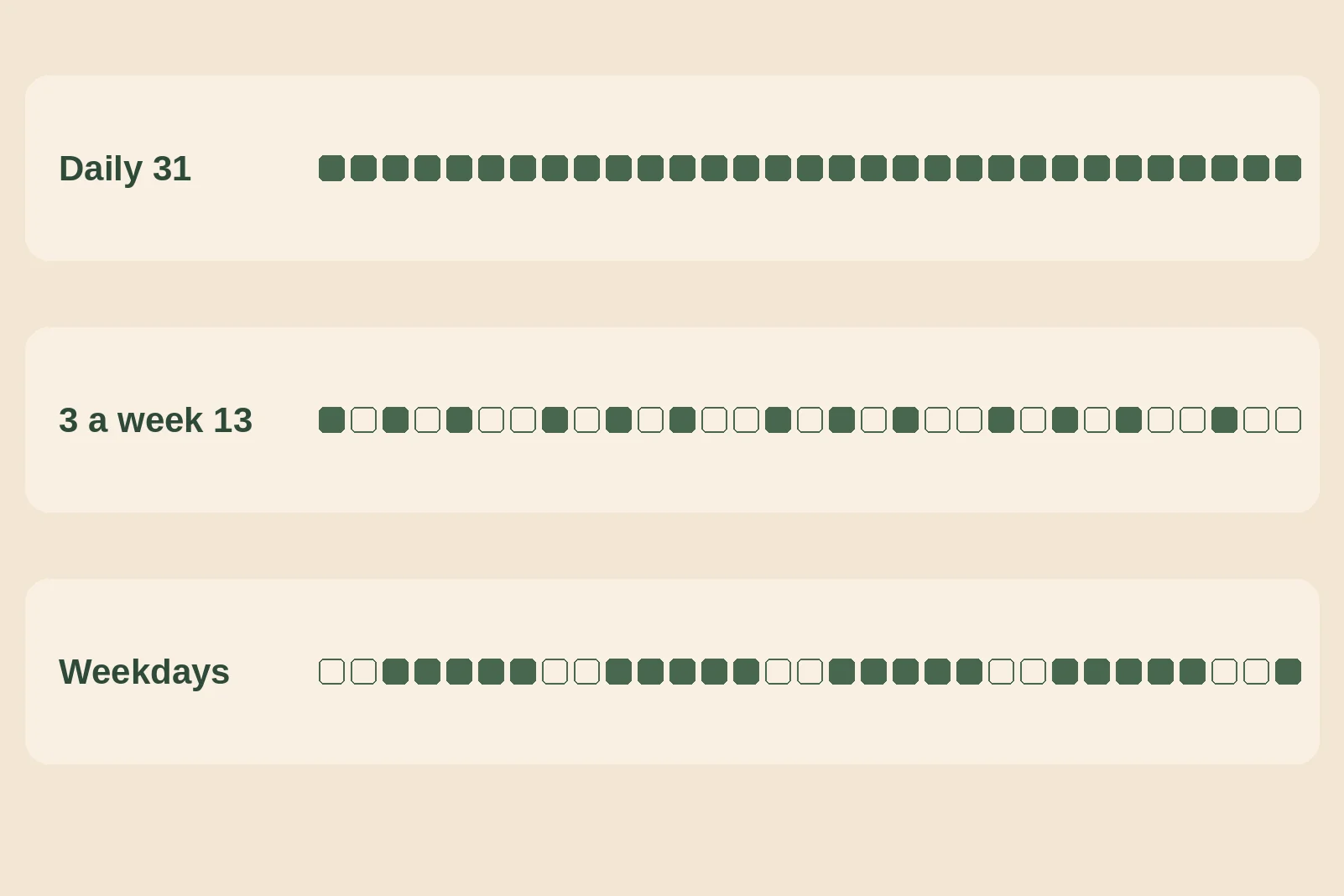
A percentage is only fair when it divides by the days you actually planned, and not by every day on the calendar, which starts to matter the moment one of your habits is not a daily one.
Suppose that you plan to go to the gym three times a week and to read every single day, in a 31-day month:
- Read, daily: all 31 days are planned days, so the denominator is 31.
- Gym, three times a week: about 13 planned days (four full weeks at 3, plus a few days).
- Weekdays only, such as an inbox check: count only the Monday to Friday days that fall inside that particular month.
If you divide the gym habit by 31 days, you will score yourself at only 42% for doing precisely what you planned to do. That is a misleading reading of a perfectly good month, so it is better to decide the planned days for each habit first and then count the check-offs against that number. In our sheet, Setup holds a set of target days for each habit, so the plan sits next to the habit it belongs to.
The same logic applies to a partial schedule inside a single week, because when a habit is planned for "5 days out of 7", two empty boxes in that week still meet the target. A missed Tuesday was already inside the plan.
A Worked 31-Day Month
The following example shows what a series of daily marks adds up to over a whole month, and it is invented purely to demonstrate the arithmetic. It is not a result from real users.
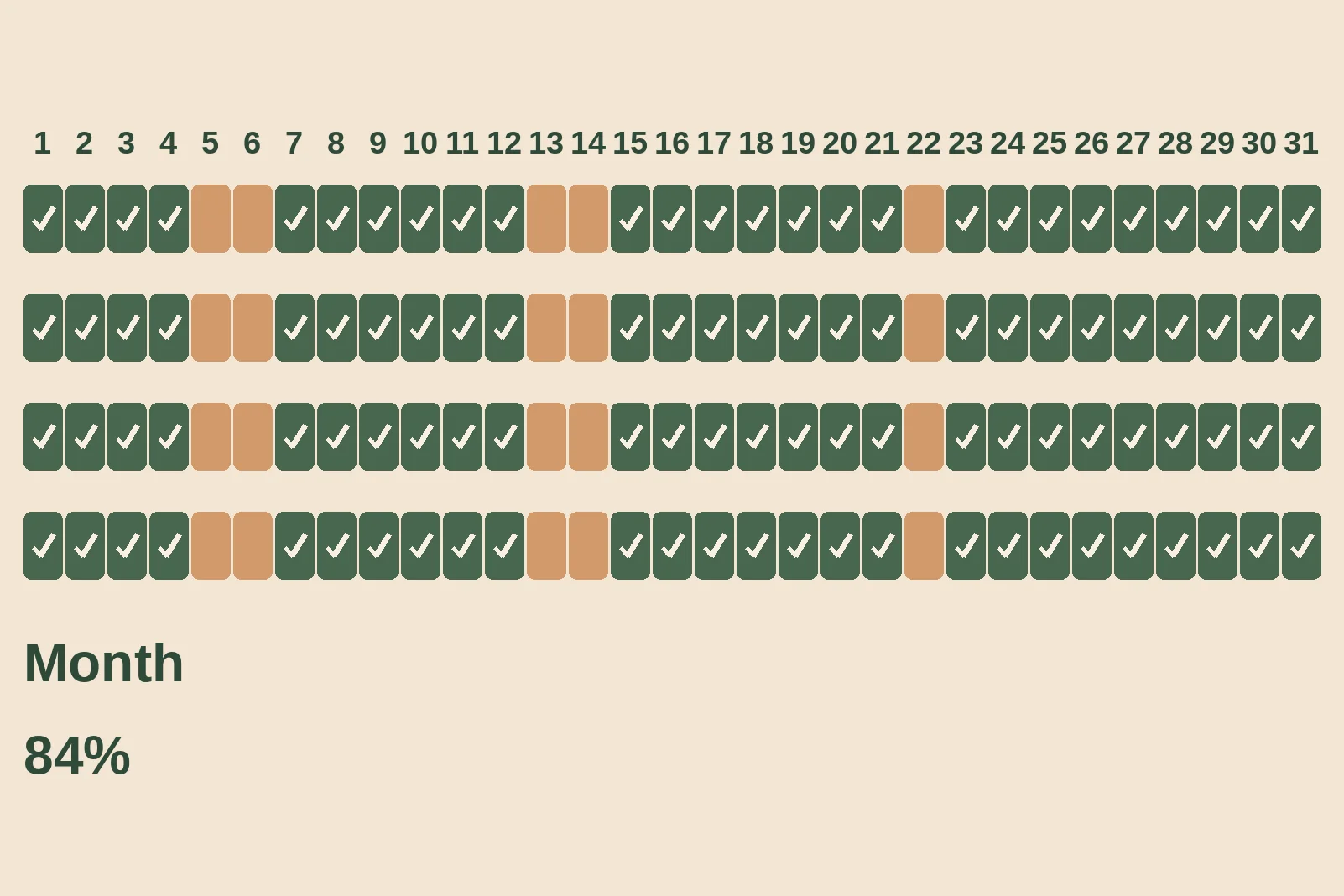
The month has four daily habits and 31 days, which gives 124 boxes in total, and five of those days are fully missed: days 5 and 6, days 13 and 14, and day 22. Each missed day empties all four boxes.
| Days | Boxes | Missed days | Checked | Empty | Share |
|---|---|---|---|---|---|
| 1 to 7 | 28 | 5, 6 | 20 | 8 | 71% |
| 8 to 14 | 28 | 13, 14 | 20 | 8 | 71% |
| 15 to 21 | 28 | none | 28 | 0 | 100% |
| 22 to 28 | 28 | 22 | 24 | 4 | 86% |
| 29 to 31 | 12 | none | 12 | 0 | 100% |
| Month | 124 | 5 | 104 | 20 | 84% |
104 divided by 124 is 83.9%, so the month reads 84%. Five missed days out of 31 looks discouraging when you stare at the empty boxes one by one, yet it is a solid month when you read the total as a single number.
Now read the same month as a streak. A counter that resets to zero after any single miss would show 9 on day 31 and would have shown zero on days 5, 13 and 22. A reader who only watched that number would have seen three collapses in a month where they showed up 26 days out of 31. In our sheet a single miss pauses a streak and two misses in a row end it, so day 22 is a pause and days 5 and 6 and days 13 and 14 each end one. The month percentage keeps counting through all of it.
Two things are worth taking from the example. First, the two missed pairs are the most important signal in the whole table. A lone miss on day 22 changed the month by about 3 percentage points, while each pair cost roughly 6. This is the idea behind the never miss twice rule. Second, the Lally study also found that too many missed repeats, even spread out over time, had a cumulative effect. So the percentage does not excuse skipping days. It shows you whether the misses are gradually piling up.
What a Daily Mark Cannot Tell You
A check-off tells you that you completed the habit but not how it went, and it cannot tell you whether the minimum is still the right size or why a pair of days was missed. Two small additions cover most of that particular gap.
- A one-line note when you miss two in a row. "Travel", "flu" or "deadline week" is enough. As a result, next month you will know whether a low score was life or a bad target.
- A monthly question per habit. If a habit scores under 60%, ask whether the minimum was too big; if it scores over 90%, ask whether it can grow a little. A habit that scores 61% at half the size does more for you than one that scores 0% at full size.
The don't break the chain method made the daily mark famous, although its weakest point is that it measures only the unbroken chain and ignores everything around it. A daily tracker earns its keep when the daily marks roll up into a month you can read.
The tracker will not remind you. A paper page and a spreadsheet will not nudge you under any circumstances, so the evening check-off has to become a habit of its own, and that is why the moment should stay fixed and sit next to something that already happens every day.
Why Trust This Article
Cosmo Suite makes the Ultimate Habit Tracker, so we have an interest in how it is described. The About page identifies the company, and the editorial policy explains how blog content is prepared. The research claims come from two named sources, listed at the end of the page and checked on 24 November 2026. The competitor details in the table come from each product's own public page or search listing, so check them before you rely on them. The 31-day month is invented to show the arithmetic. It is not a real user result. Product details come from the published contents list, and the product description on this page does not go beyond it.
Where the Ultimate Habit Tracker Fits
The Ultimate Habit Tracker (ultimatehabittracker.site) is a spreadsheet with 21 tabs, in Excel and Google Sheets, both included. You type your habits only once in Setup, start with three and add up to 25, and give each a color and target days. They then appear in all 12 monthly tabs.
Each monthly tab has a daily checkbox grid, so the evening check-off is a single click and involves no typing. The monthly percentage counts every day you showed up, which is the number in the worked month above. One miss pauses a streak, two in a row end it, and a forgotten day can be filled in later. The Streaks & Comebacks tab holds the streak side, and Habit Patterns displays which weekdays you typically miss.
A daily habit tracker spreadsheet you buy once for $9 has no reminders, by design, so the fixed evening moment is what brings you back. Printable monthly and weekly pages are included for anyone who prefers working on paper, and a short video tutorial walks through the complete setup.
Frequently asked questions
What is a daily habit tracker?
It is a record where you mark each habit once a day, done or not done. It can be a printed page, an app or a spreadsheet. The mark is the point. A daily habit tracker works when marking takes seconds and the totals show up without extra work.
How many habits should I put in a daily habit tracker?
Start with three. Each habit adds one decision to your evening, so a long list turns the check-off into admin. When three habits feel automatic, add a fourth. A small list that you open every day beats a long one you open on Sundays.
When should I fill in my daily habit tracker?
Pick one fixed moment, such as after dinner or before you close your laptop. A fixed moment turns the check-off into a routine of its own. If you do a habit in the morning, you can still mark it at night. One sitting is easier to keep than five.
What counts as done for a habit?
Decide before the day starts and write it down. A minimum version is a good rule: ten pages becomes one page, a 20-minute walk becomes a walk to the end of the street. If you did the minimum, check the box. Doing more is a bonus, not the standard.
What if I forget to fill in a day?
Fill it in the next day if you remember what you did. If you do not remember, leave the box empty. An honest empty box is better than a guess, because guesses make the monthly total less useful. Our sheet lets you fill in a forgotten day later.
Do I need an app for a daily habit tracker?
No. Paper, a free online tool, an app or a spreadsheet all work. Choose according to where you have quit before. An app can remind you, which paper and a sheet cannot. A sheet or printed page is a file you own, with no subscription.
How do I score a daily habit tracker?
Divide the checked boxes by the boxes you planned, and read it as a percentage for the month. If four habits give 124 boxes in a 31-day month and you check 104, the month reads 84%. Score the month, not only the streak, so one bad day does not erase the rest.
Sources
Keep reading
Habit Tracking
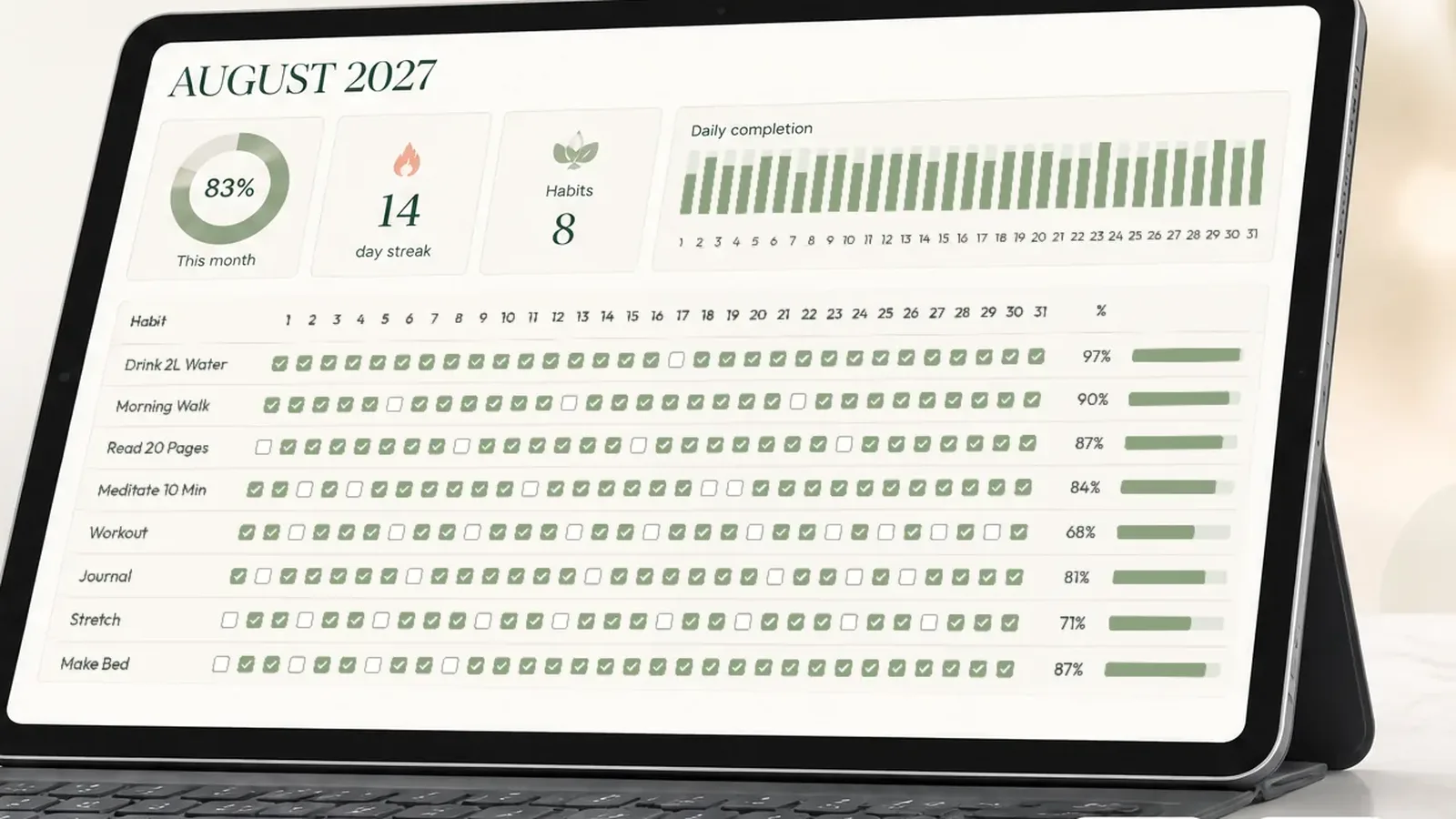
Habit Tracker Spreadsheet: How to Build One That Survives a Missed Day
Set up a habit tracker spreadsheet in Excel or Google Sheets that keeps counting after a missed day: the layout, formulas, streak rule and what to track.
· 9 min read
Habit Tracking
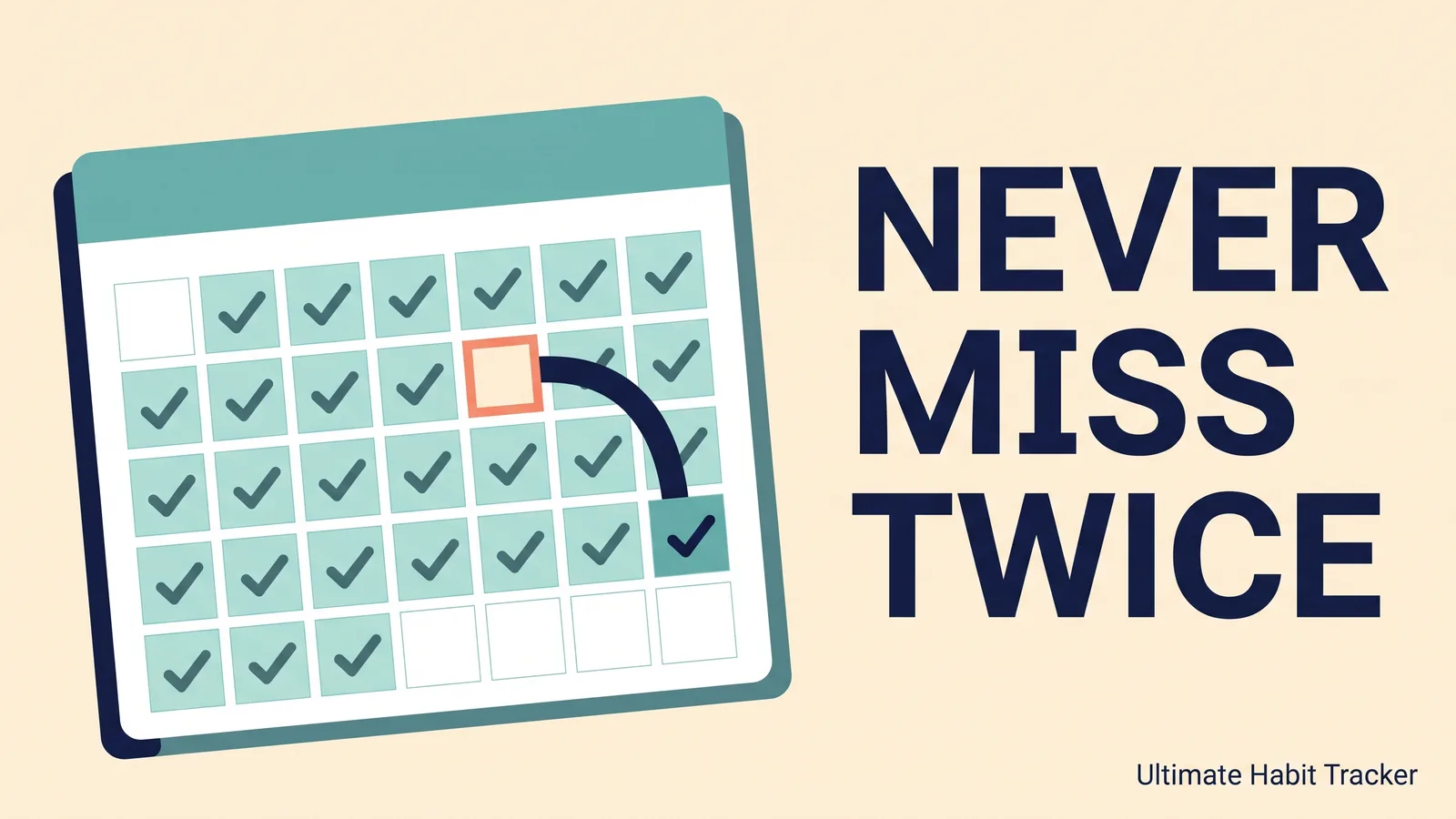
How to Use the Never Miss Twice Rule (Without Starting Over)
Never miss twice can help you restart after a missed session. Learn how to count planned opportunities, handle two misses in a row, and keep a monthly record.
· 8 min read

Habit Tracking
How Many Habits Should You Track? Starter Sets by Goal (2026)
Choose a small set of habits to track by goal, define what counts, and adjust it when your week changes. Includes practical starter sets and a sample month.
· 7 min read
