How to Use the Never Miss Twice Rule (Without Starting Over)
Never miss twice can help you restart after a missed session. Learn how to count planned opportunities, handle two misses in a row, and keep a monthly record.
By Ultimate Habit Tracker by Cosmo Suite · Editorial policy
Published · 8 min read
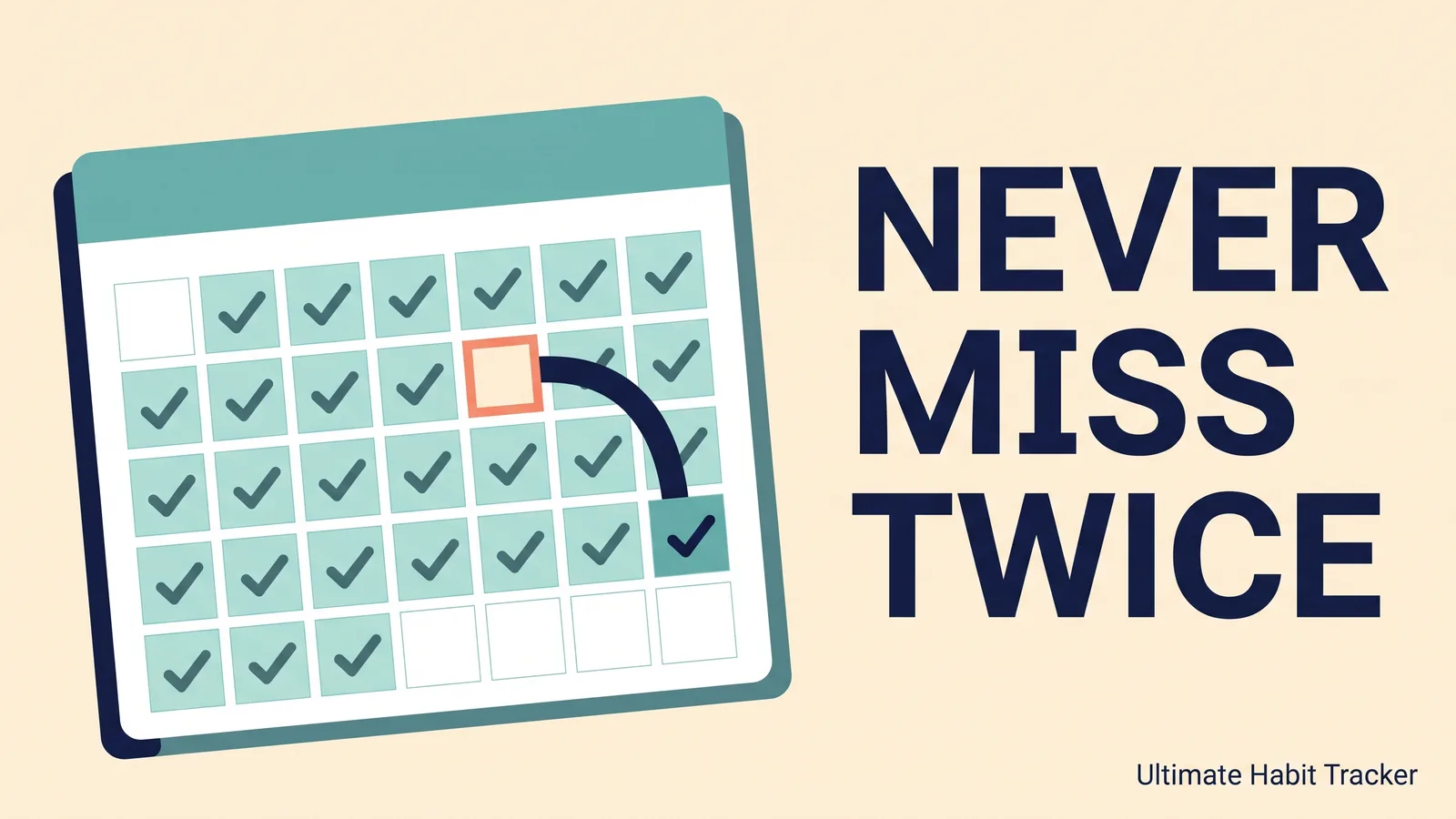
Missing one planned habit can make the rest of the month feel pointless. The empty box is easy to spot. The walks, pages read or workouts you already did can fade into the background.
The never-miss-twice rule gives you a next step: if you miss once, return at the next planned opportunity. If you miss that opportunity too, look at what got in the way and adjust the plan. It is a useful reminder, not a promise that habits will form or a rule that every habit must happen daily.
What happens when you miss once
Never miss twice is a practical recovery rule: after one missed session, try again at the next planned opportunity. James Clear describes the idea in his essay “Avoid the Second Mistake”, where he explains why the second miss can matter more than the first.
Keep the missed day visible, then return when the routine is scheduled again. The goal is to make the next step clear, not to keep a perfect record. That gives you a clear next action without turning the rule into another standard to meet.
A missed day can show where the routine needs work. Perhaps the cue was easy to overlook. Perhaps the habit took longer than expected, or the timing no longer works. You can use the next opportunity to try again, then change the plan if the same barrier shows up.
The spreadsheet uses two consecutive misses as a practical prompt to review the plan. The habit-formation study below did not test this cutoff, so treat it as a reminder rather than a scientific threshold. The Ultimate Habit Tracker (ultimatehabittracker.site) is a spreadsheet that can keep the month visible while you resume.
If a blank box often makes you start the month over, keep the whole month visible while you resume.
Never miss twice at a glance
The next step depends on whether you missed one planned opportunity or two in a row. Count opportunities according to your schedule, not automatically by calendar day.
| Situation | Next move | Best for |
|---|---|---|
| You miss one planned session | Resume at the next planned session. Make that action small enough to begin. | Keeping the month honest while you return. |
| You miss the next planned session too | Check the cue, time, location or task size. Change one part of the plan. | Finding one barrier worth changing. |
| Your habit is planned three times a week | Treat the next scheduled day as the next opportunity. | Routines with set days, not daily goals. |
| You have a safety or recovery reason to pause | Follow appropriate health or coaching advice before restarting. | A safe return that fits your needs. |

For example, if you planned to read on Monday, Wednesday and Saturday, missing Monday does not make Tuesday a second miss. Wednesday is the next opportunity. If you miss Wednesday too, the two missed sessions are consecutive in your plan even though a calendar day sits between them.
Use the rule as a return cue. Your schedule, not the calendar, defines the next opportunity. It should help you resume a chosen routine without adding sessions you never planned.
Why a missed day should not erase the month
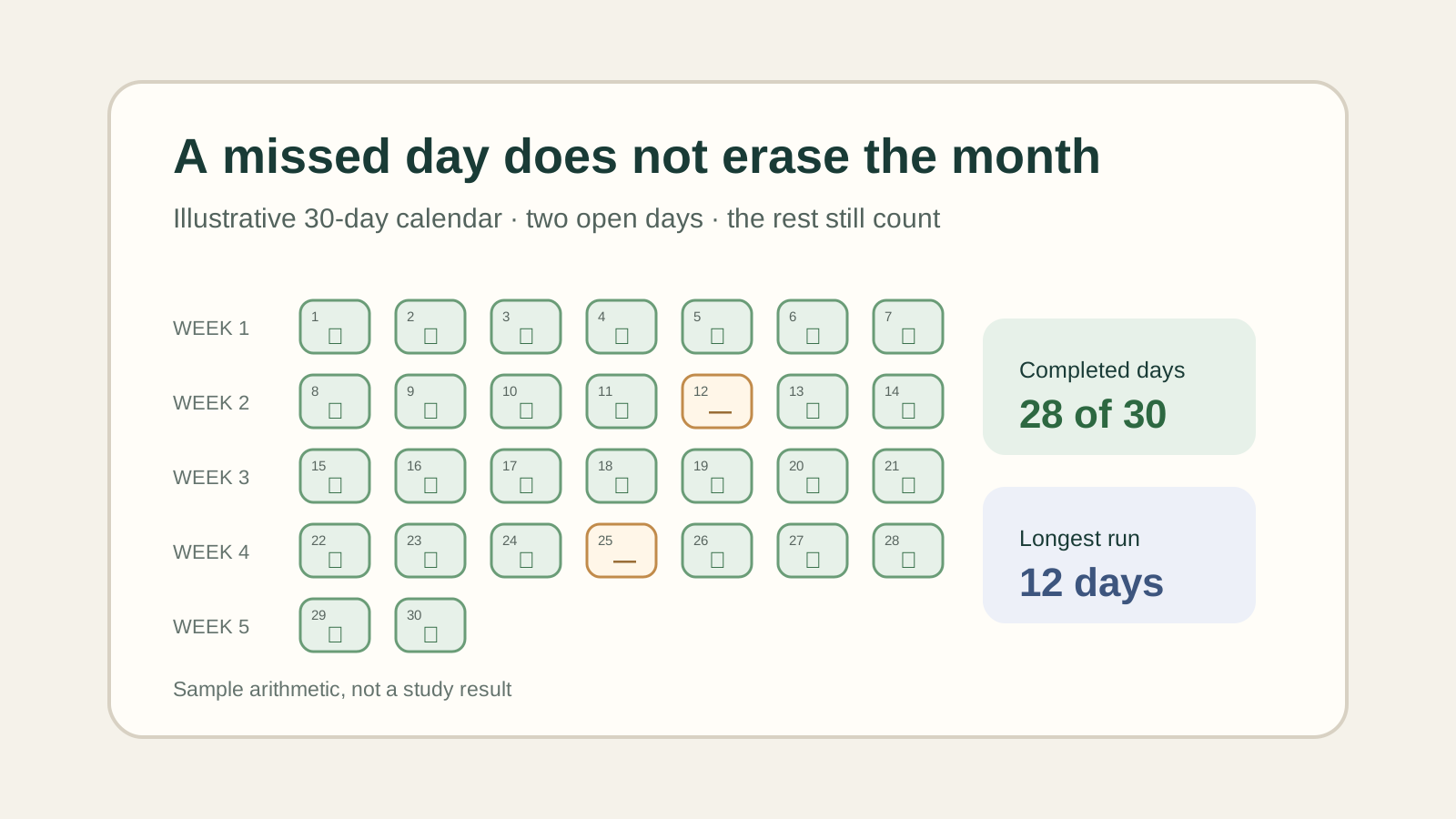
Keep a missed day visible and count completed days across the month separately from the current streak. The streak shows the latest uninterrupted run. The monthly record preserves all the days you completed.
Imagine a 30-day month with a few blank squares. The streak might pause after one blank day and begin again after you return. The monthly completion count remains the number of completed days divided by 30. A new streak does not erase the earlier work.
That is one reason a chain can feel fragile: it puts attention on whether every day connects. The chain method after a missed day explains why a break does not have to turn into a restart. For a broader look at the numbers a monthly grid can preserve, see the habit tracker spreadsheet guide.
If you use a tracker, make sure it can show both the current streak and the full period. A month view can help when a single blank box makes it hard to see the rest of your effort.
A worked 30-day example
Here is a fictional example for a daily reading habit. It is sample data to show the arithmetic, not a user result or a promise about what a tracker can make you do.
| Days | Record | What happens next |
|---|---|---|
| 1 to 4 | Four completed reading sessions | The current streak reaches four. |
| 5 | Missed | Keep the day blank. Do not restart the month. |
| 6 to 11 | Six completed sessions | The next session resumes the streak. |
| 12 | Missed | Resume on Day 13 as planned. |
| 13 to 17 | Five completed sessions | The month still includes the earlier completed days. |
| 18 to 19 | Two planned sessions missed in a row | Review whether the cue, time or reading goal is workable. |
| 20 to 23 | Four completed sessions | Restart with the normal or a smaller reading session. |
| 24 | Missed | Keep it visible and return on Day 25. |
| 25 to 26 | Two completed sessions | Continue the routine. |
| 27 | Missed | Leave the box blank. |
| 28 to 30 | Three completed sessions | Finish the month without hiding any misses. |
The sample has 24 completed days out of 30, or 80% (24 ÷ 30). Its final streak is three days. The streak describes the latest run; the monthly percentage keeps the earlier completed days in view.
The pair of misses on Days 18 and 19 is the point to inspect the setup. The reading time may have collided with another commitment, or the goal may have been too large for those days. The record tells you where to ask a question. It does not tell you that you lack discipline.
After a two-miss run, ask what happened just before the plan fell through and what made it hard to start. Then choose one specific change, such as leaving the book on the table or reading a shorter passage. A review by Gardner, Lally and Wardle describes habits as actions linked to stable cues through repetition. Their overview gives more context.
What habit research can and cannot tell you
One missed opportunity did not materially affect the habit-formation process measured in a real-world study. That result does not establish a two-miss rule.
The study by Lally and colleagues enrolled 96 volunteers; 82 provided enough data for analysis. Participants tracked their behavior and reported automaticity over 12 weeks. The study's focus was how automatic a repeated behavior became over time. It did not test the “never miss twice” slogan, compare one missed session with two, or prove that returning at the next session will work for everyone.
The study does not show that every missed session is harmless or that habits take a fixed number of days to form. It also says nothing about whether a particular tracker can create a habit.
Use the rule as a reminder to return, then adjust based on the routine you actually chose. If the habit involves injury, illness or a recovery plan, follow the relevant professional advice instead of a streak rule.
What helps you return after a miss
A short restart is usually easier to act on than a promise to make up for lost time. James Clear recommends setting a schedule and starting again without trying to compensate for the missed session.
Try this sequence:
- Name the next opportunity. Choose the next time your routine is scheduled. “Tomorrow at lunch” is easier to act on than “I need to get consistent.”
- Make the first step clear. Put the book on the table, open the workbook or set out the walking shoes. Reduce the number of decisions between you and starting.
- Shrink the action if needed. Read one page, walk for a few minutes or do the first safe part of a planned session. A smaller start can get you back into the routine without turning the next session into a penalty.
- If you miss again, change one condition. Move the cue, choose another time or make the task easier to begin. Keep what worked and adjust the part that did not.
- Keep the record honest. Leave a missed opportunity blank. A clear record is more useful than a perfect-looking one.
Start with the next planned step. There is no need to make up two sessions at once or add extra work because you missed a day. If a particular routine has its own safety needs, use the advice that applies to that routine.
Why trust this article
Cosmo Suite makes the Ultimate Habit Tracker, so it has an interest in describing the product well. The About page identifies the company, and the editorial policy explains how blog content is prepared. Product details below come from the published contents list. The research summary refers to the linked 2010 study, and the rule's origin is attributed to James Clear's own article. We checked both sources on 24 October 2026.
The sample month is illustrative arithmetic, not customer data or a product test. The two-in-a-row cutoff is a tracker design choice. It is not presented as a clinical recommendation or a finding from the habit-formation study.
Where the Ultimate Habit Tracker fits
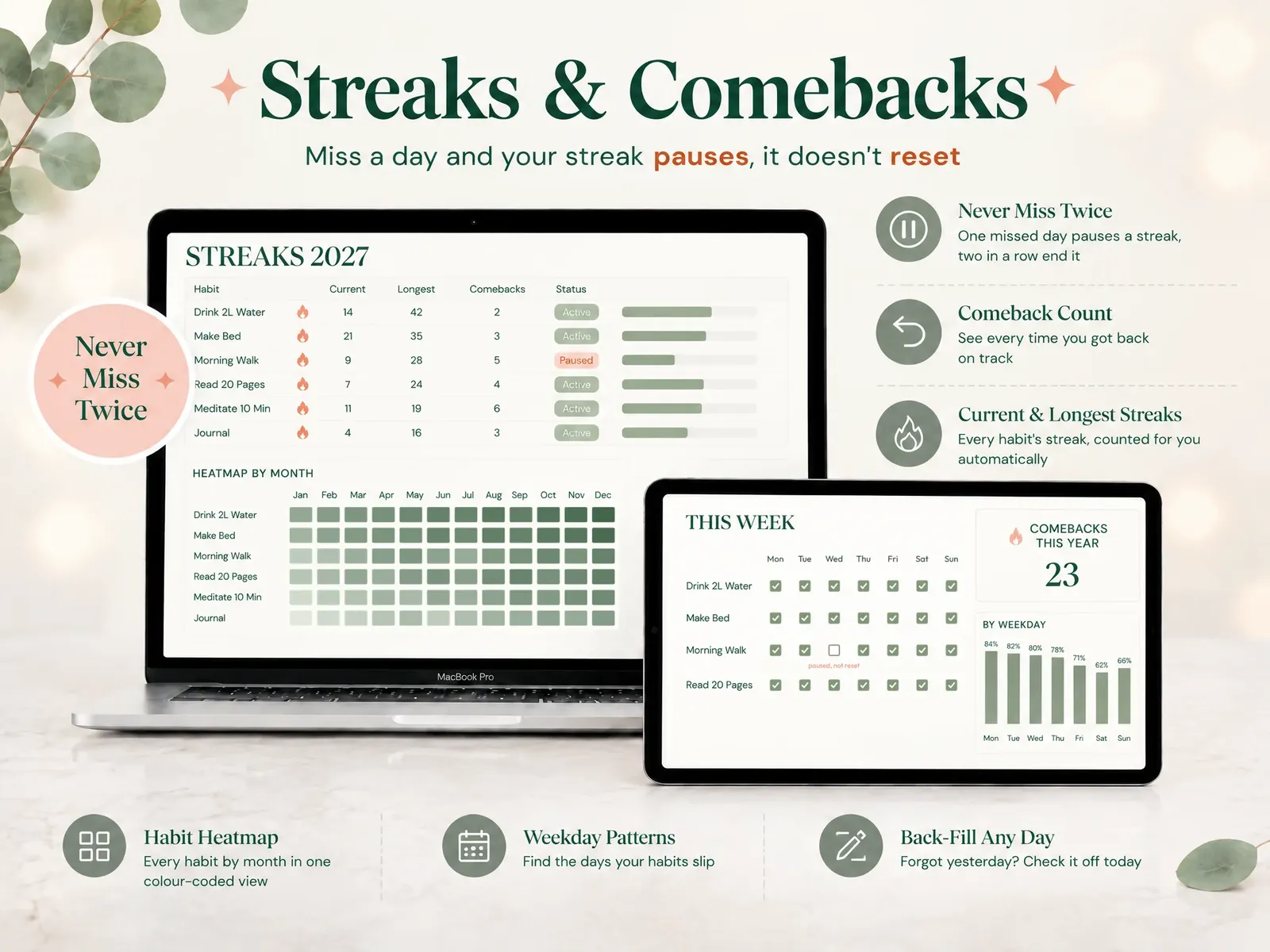
The Ultimate Habit Tracker includes 21 tabs across Excel and Google Sheets. Its monthly grid keeps completed days visible, and its Streaks & Comebacks tab is built around the same distinction used here: one miss pauses a streak; two consecutive misses end it. A missed day can be filled in later, and the monthly percentage still counts the days shown.
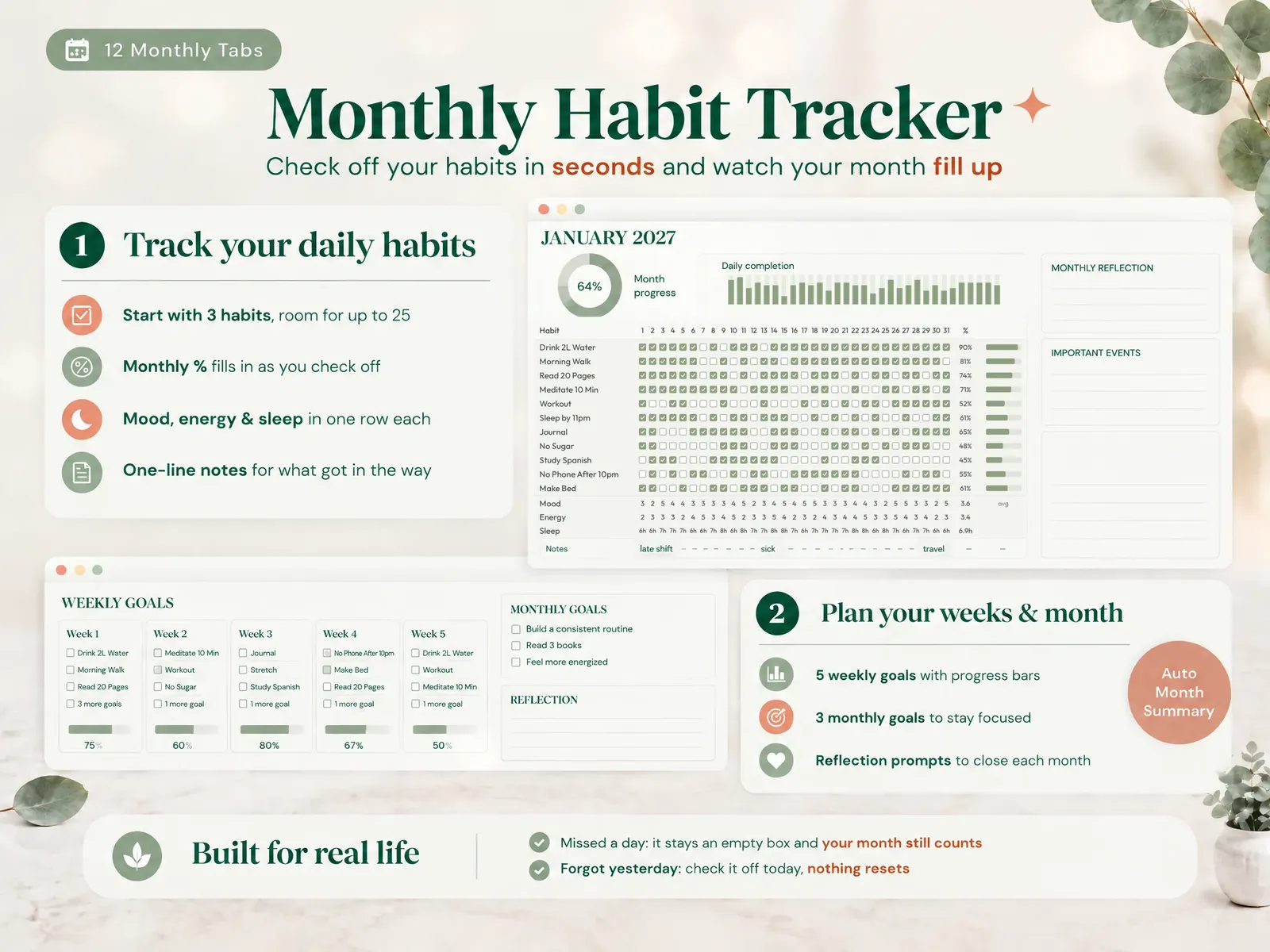
The file includes a Start Here guide, a Setup tab, monthly trackers, dashboards, annual goals and a Year in Review. You enter habits once and use checkboxes for daily tracking. It does not send reminders or notifications, so it suits someone who wants a spreadsheet they can open on their own schedule.
If keeping a monthly record alongside a streak would help, the Ultimate Habit Tracker spreadsheet includes the month grid and comeback count.
Frequently asked questions
What does never miss twice mean?
It means returning at the next planned opportunity after a miss. If you miss again, review the cue, timing or size of the habit. The two-in-a-row cutoff is a rule of thumb.
What should I do after missing a habit once?
Leave the missed day visible and try again at the next planned time. Choose a smaller version if starting feels hard. There is no need to double the next session or make the month look perfect.
Does one missed day ruin a habit?
No. The actions you completed still count. In one real-world study, a missed opportunity did not materially affect the habit-formation process researchers measured. That result applies to the study, not every habit.
Should I make up a missed workout or task?
Usually, return to your normal schedule. For activities with safety or recovery needs, follow your clinician or coach. For ordinary routines, a smaller next step may be easier to restart.
Does the rule apply to habits that happen a few times a week?
Yes. Count the opportunities on your schedule. If you plan to read on Monday, Wednesday and Saturday, Wednesday is the next opportunity after a missed Monday.
Is never miss twice scientifically proven?
No study cited here tested the exact slogan or its two-miss cutoff. Lally and colleagues found that one missed opportunity did not materially affect the process they measured. Treat the rule as a prompt to return.
Sources
- James Clear, Avoid the Second Mistake
- Lally, van Jaarsveld, Potts and Wardle (2010), How are habits formed: Modelling habit formation in the real world, European Journal of Social Psychology
- Gardner, Lally and Wardle (2012), Making health habitual: the psychology of habit-formation and general practice, British Journal of General Practice
Keep reading
Habit Tracking
Why Don't Break the Chain Stops Working After One Miss (and How to Fix It)
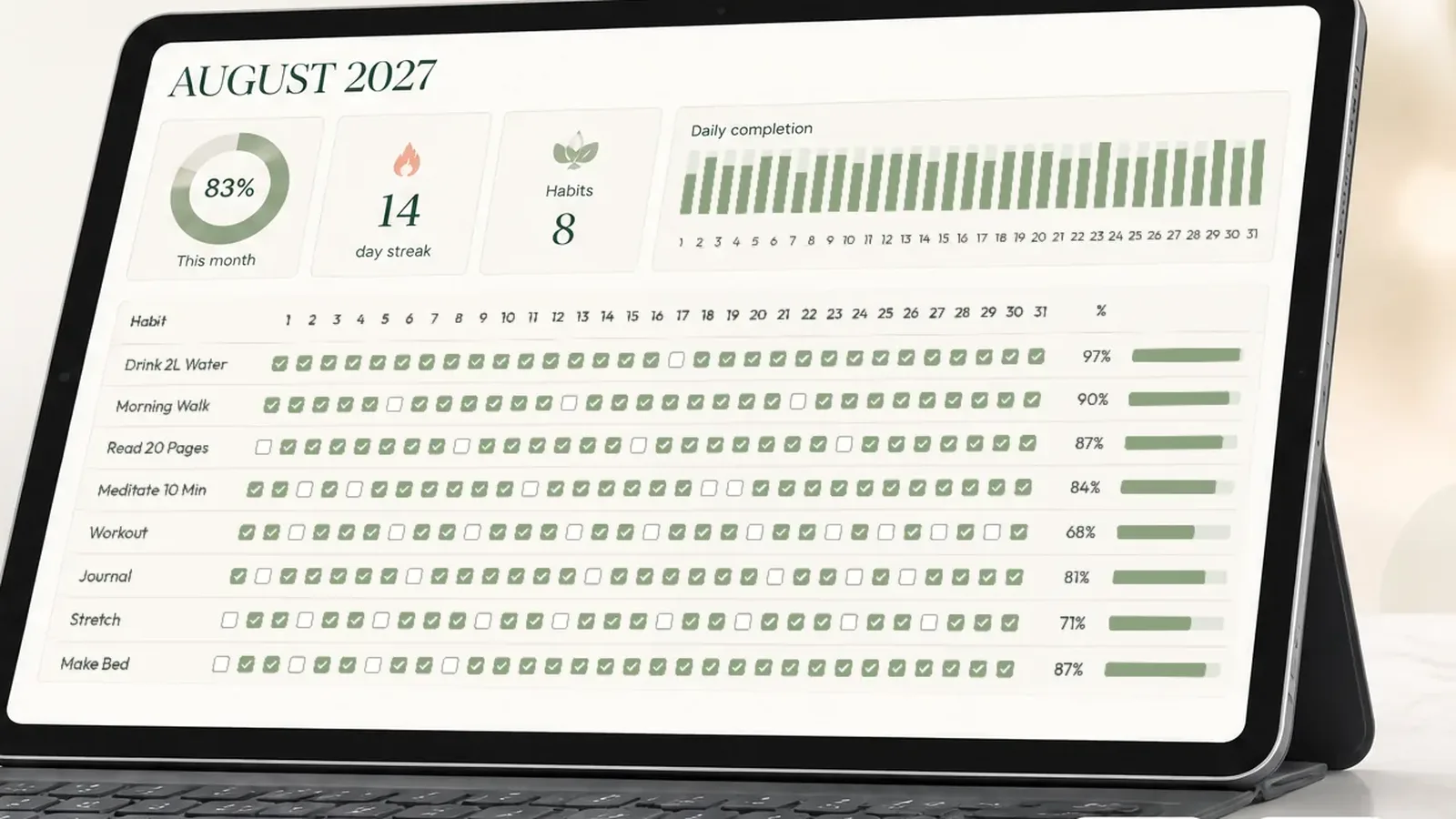
Don't break the chain can make daily habits visible, but one missed day can erase the streak. See a 30-day example and a calmer way to restart.
· 7 min read
Habit Tracking
Habit Tracker Spreadsheet: How to Build One That Survives a Missed Day
Set up a habit tracker spreadsheet in Excel or Google Sheets that keeps counting after a missed day: the layout, formulas, streak rule and what to track.
· 9 min read
Habit Tracking
How to Make a Habit Tracker in Google Sheets
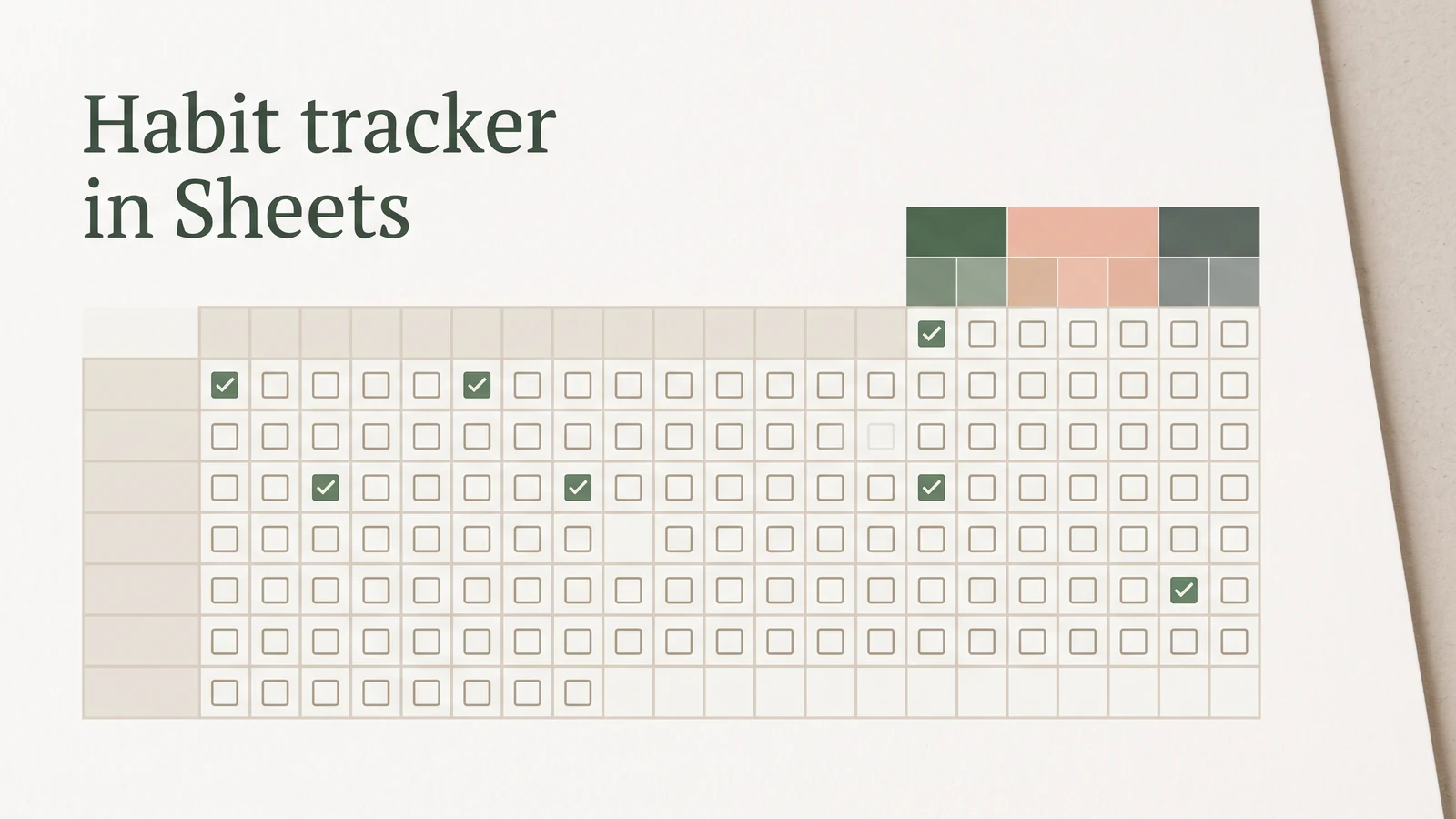
How to make a habit tracker in Google Sheets: set up checkboxes, monthly scores, colors and a one-miss streak formula, with a worked 30-day example.
· 9 min read
