Why Don't Break the Chain Stops Working After One Miss (and How to Fix It)
Don't break the chain can make daily habits visible, but one missed day can erase the streak. See a 30-day example and a calmer way to restart.
By Ultimate Habit Tracker by Cosmo Suite · Editorial policy
Published · 7 min read
The don't break the chain method gives a habit a visible score: mark each day you do it, then try to keep the run going. That can make showing up satisfying. It can also make one empty square feel like the whole month is gone. This guide pairs the current chain with a month completion count so the two views stay separate.
After a miss, keep the day visible and return at the next planned opportunity. A streak is one useful view of a habit, but it is not the only one. See the month-by-month spreadsheet guide for another example of keeping a full month in view. A monthly count shows what you completed across the whole period, including the days before the break.
Why a Chain Helps, Until It Breaks
The don't break the chain method is a way to track a repeated action by marking each completed day on a calendar. Each mark extends the visible run. That simple feedback can make progress easy to notice and give you a small reason to show up again.
The method is often attached to Jerry Seinfeld. The familiar account came from comedian Brad Isaac, who wrote about advice he said Seinfeld gave him on a calendar and a red marker in a 2007 Lifehacker article. Treat that as Isaac's account of a conversation, rather than a proven origin story for the method. The useful part is the calendar: it turns repeated effort into something you can see.
The calendar becomes a verdict when every day has only two outcomes: success or failure. One missed day ends a consecutive run. The days you completed still count. If the calendar offers only one measure, the break can look like a total reset. Some people respond by avoiding the tracker or waiting for a fresh Monday or month to begin again.
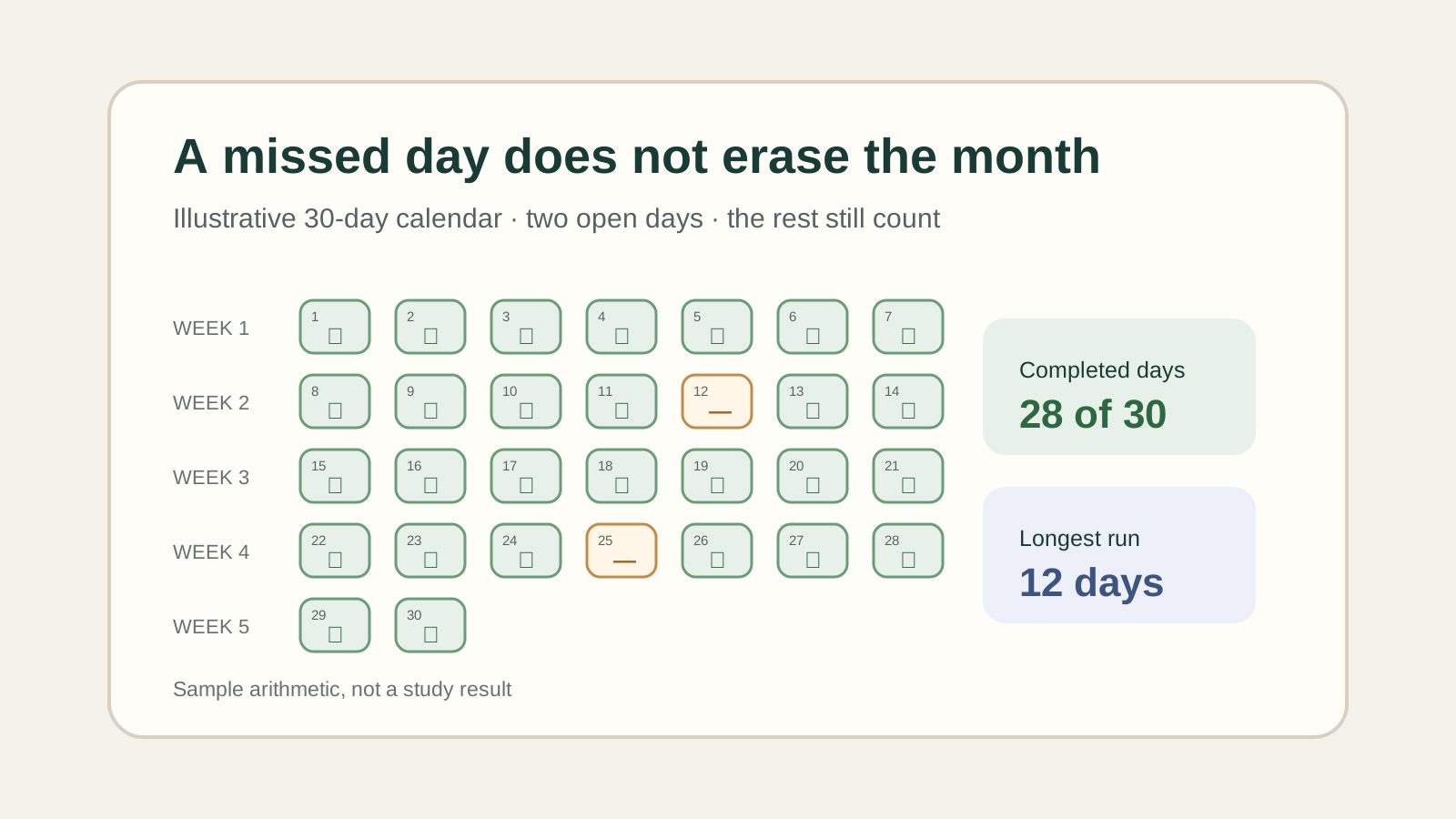
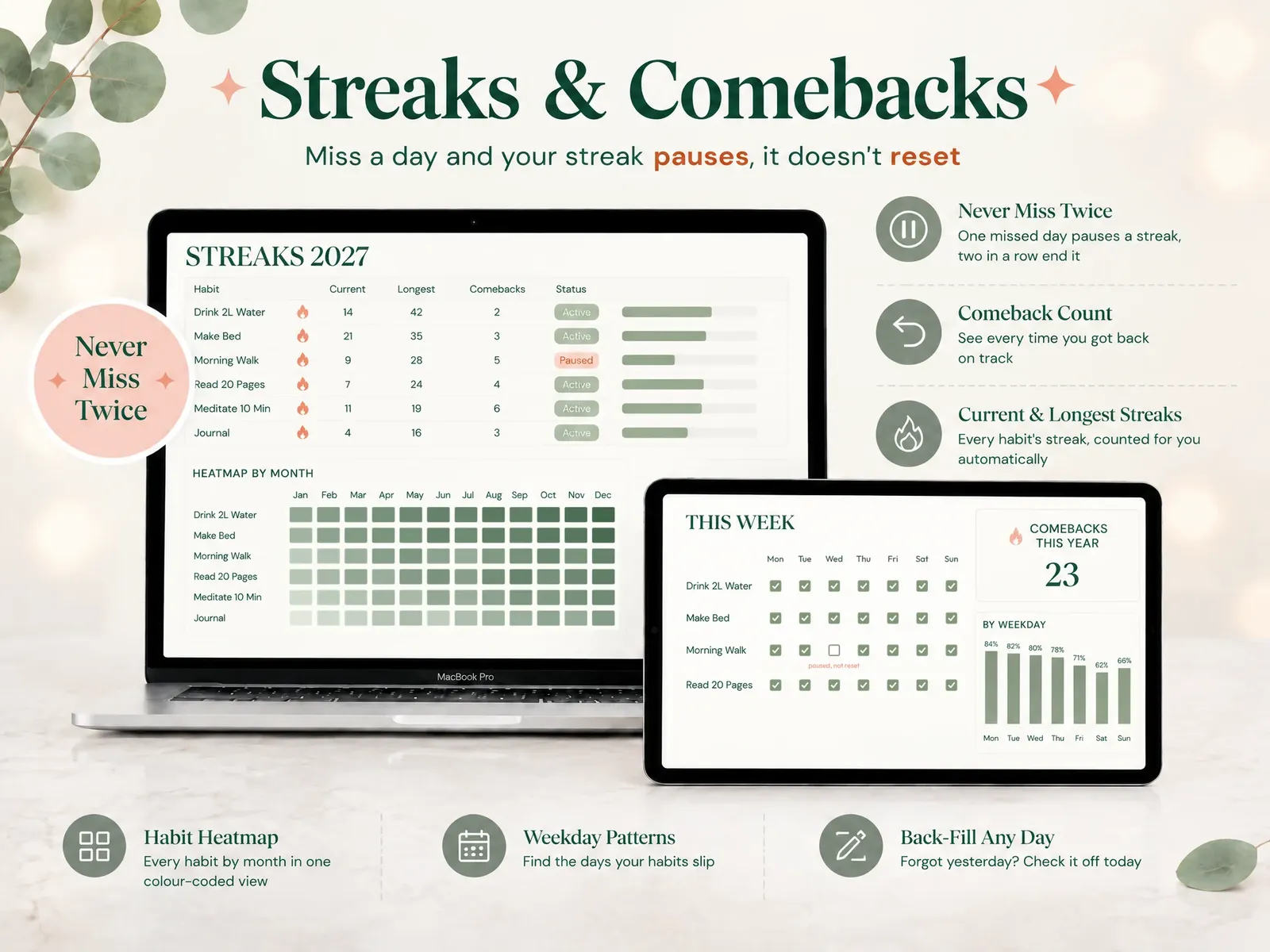
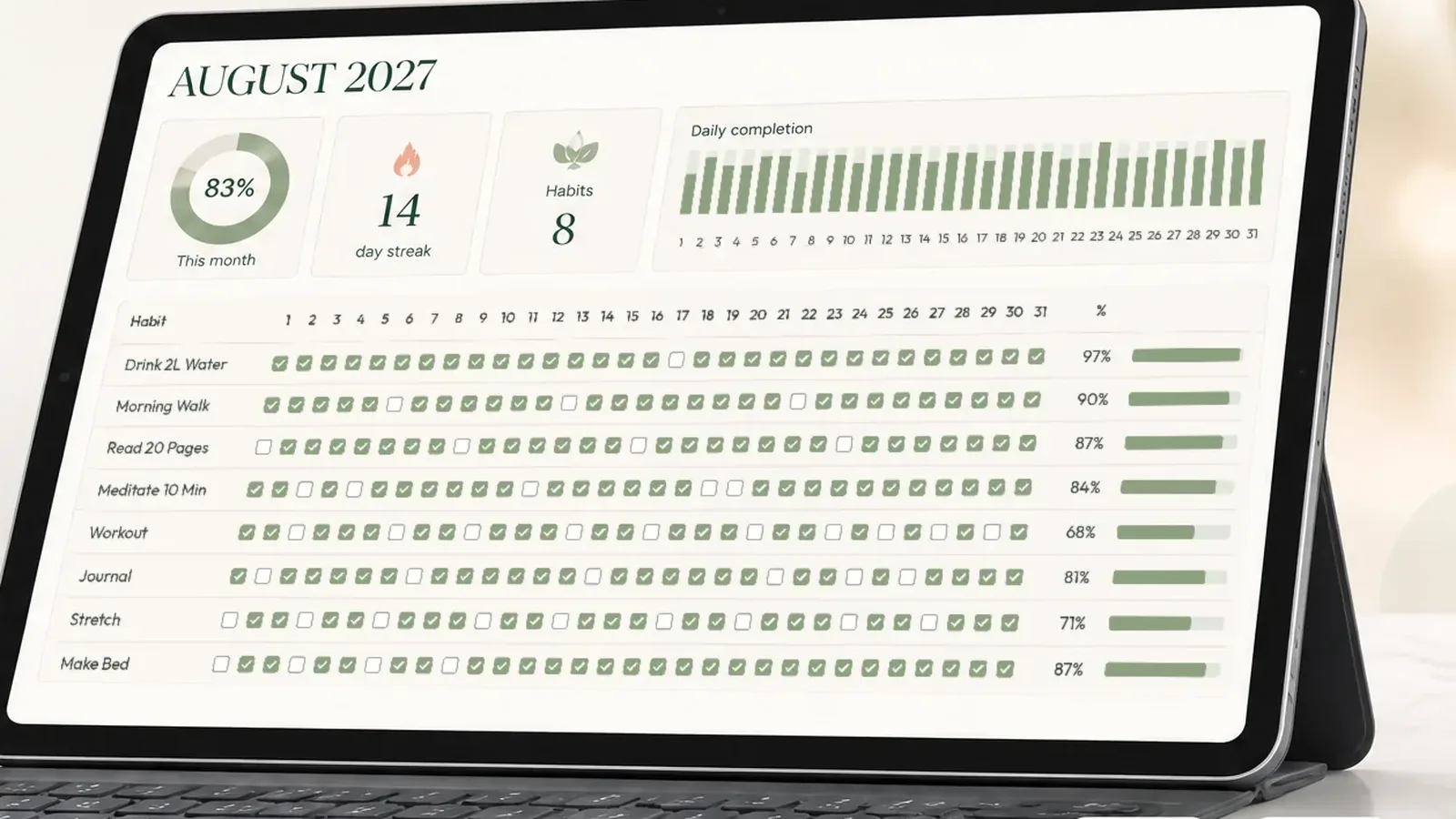
The sample calendar shows how an empty square can sit beside a month of completed days. The screenshot below shows the tracker’s separate streak and comeback record.
Don't Break the Chain at a Glance
The chain measures consecutive planned days completed. A period score measures completed opportunities across a longer window. They answer different questions, so use both when a streak alone makes progress hard to read.
| View | What it tells you | What a miss changes | Best for |
|---|---|---|---|
| Current chain | How many planned opportunities in a row you completed | The current run ends or pauses, depending on your rule | A daily practice where continuity matters |
| Month completion | How many planned days you completed this month | One empty day stays in the count | Seeing the whole month fairly |
| Comebacks | How often you returned after a gap | A return becomes visible progress | Habits with interruptions |
For a daily habit, count only the days you planned to do it. For a three-times-a-week habit, a rest day is not a broken chain. The schedule defines the opportunities; the tracker records what happened.
A Worked 30-Day Example
Imagine you planned to read every day for a 30-day month. You read on 28 days and miss days 12 and 25. The month score is 28 out of 30, or about 93%. The longest consecutive run is 12 days, from day 13 through day 24. The final run after the second miss is five days.
| Measure | Result | What it means |
|---|---|---|
| Planned opportunities | 30 | The month had 30 reading days in this example |
| Completed days | 28 | Two days remain empty |
| Month completion | 28/30 = 93% | Most planned days were completed |
| Longest chain | 12 days | The longest uninterrupted run was twelve days |
| Current chain | 5 days | The run after the second miss is five days |
The calendar records 28 completed days and two returns to the habit after a miss. The sample calculation shows the month score alongside the shorter streak. Both figures come from the stated 30-day example, not from collected user data. A streak view highlights continuity; a month score keeps the wider record in view.
This example uses simple arithmetic, not results from a study or a test of the Ultimate Habit Tracker. Your denominator should match the opportunities you planned. If you intended to read on weekdays only, count the planned weekdays, not all 30 calendar days.
What to Do After a Miss
Make the next chance easy to start. If you missed your evening reading, put the book where you will see it and choose a short amount for the next evening. You are aiming to resume the action, not repay the missed day with extra work.
James Clear's habit-tracking guide recommends marking a habit soon after doing it and describes a “never miss twice” rule for returning after an interruption. In Avoid the Second Mistake, he also argues for returning after one miss instead of letting it become a pattern. That phrase is a recovery prompt. It does not mean the two methods are identical: a chain records consecutive completions, while the reminder is to take the next available opportunity.
Use a short review when a miss repeats:
- Name the obstacle. Was the planned time crowded, did you forget, or was the action too large for that day?
- Change one part. Move the cue, shorten the action, or choose a more realistic schedule.
- Keep the empty square. It is an accurate record, not a reason to discard the rest of the month.
- Mark the return. Let the calendar show both the interruption and the next completed day.
Do not double the next workout, reading session or practice to punish yourself. The chain is there to make a pattern visible. It cannot decide what a missed day means or how demanding the next session should be.
When the Chain Is a Poor Fit
A daily chain works best when the behavior itself is planned every day and a short mark gives useful feedback. It is a poor fit when the habit needs rest days, happens on a changing schedule, or becomes something you do only to protect the streak.
Choose a weekly target when the behavior is naturally weekly. For example, if you plan three drawing sessions each week, record those three opportunities. You can track the week as a whole without treating the four non-session days as failures.
Keep the action small enough to finish on a disrupted day. If the minimum version still feels too heavy, change it. If the calendar creates more guilt than information, replace the streak with a monthly count or a simple list of sessions. A tracking method should help you decide what to do next.
What Actually Keeps You Coming Back
The useful part of a tracker is the record it leaves for your next decision. A long chain can be encouraging, and a month with a few gaps can still show steady effort. Looking at both views can help you spot whether the problem is the timing, the action, or a schedule that does not fit your life.
Make the next step concrete. Tie it to something that already happens, keep the action manageable, and decide what counts before you start. A review of habit formation in health care by Gardner, Lally and Wardle advises repeating one action in the same context. If your goal is to practice guitar four times a week, write that schedule down. Then judge the week against four planned sessions, not seven daily boxes.
When you miss, note the reason briefly if it will help you adjust. A useful note might be “late meeting” or “forgot the book in another room.” Avoid turning the note into a score of your character. The point is to change the setup if the same friction keeps appearing.
Why Trust This Article
We are the Cosmo Suite team that makes the Ultimate Habit Tracker. The calendar example above is arithmetic made for this article, not a user study. The method history links to Brad Isaac's account, and the habit research links to Lally and colleagues' paper and the British Psychological Society's summary. Read about the team and our editorial policy to see how we handle product content. Sources checked 15 October 2026.
Where the Ultimate Habit Tracker Fits
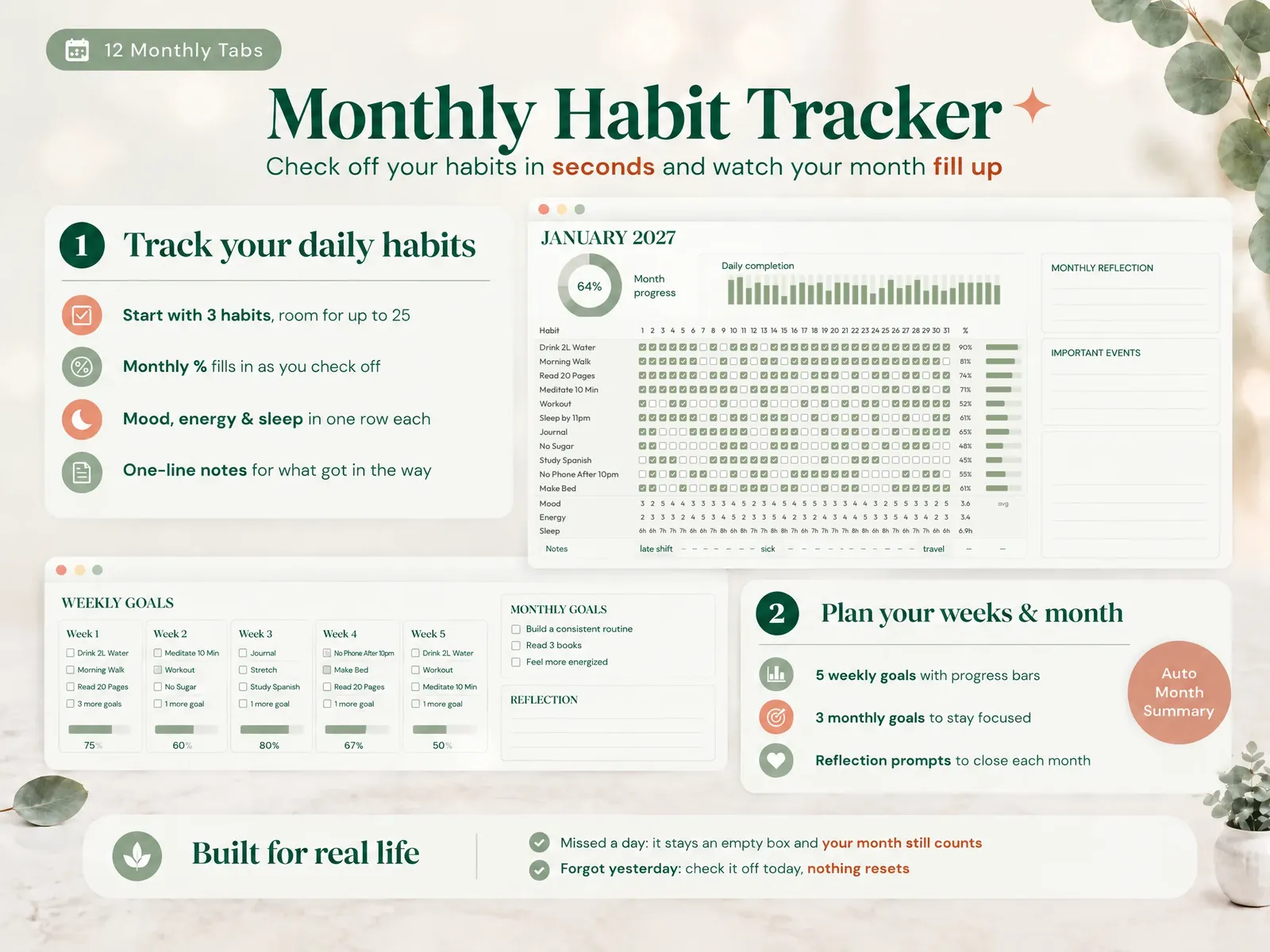
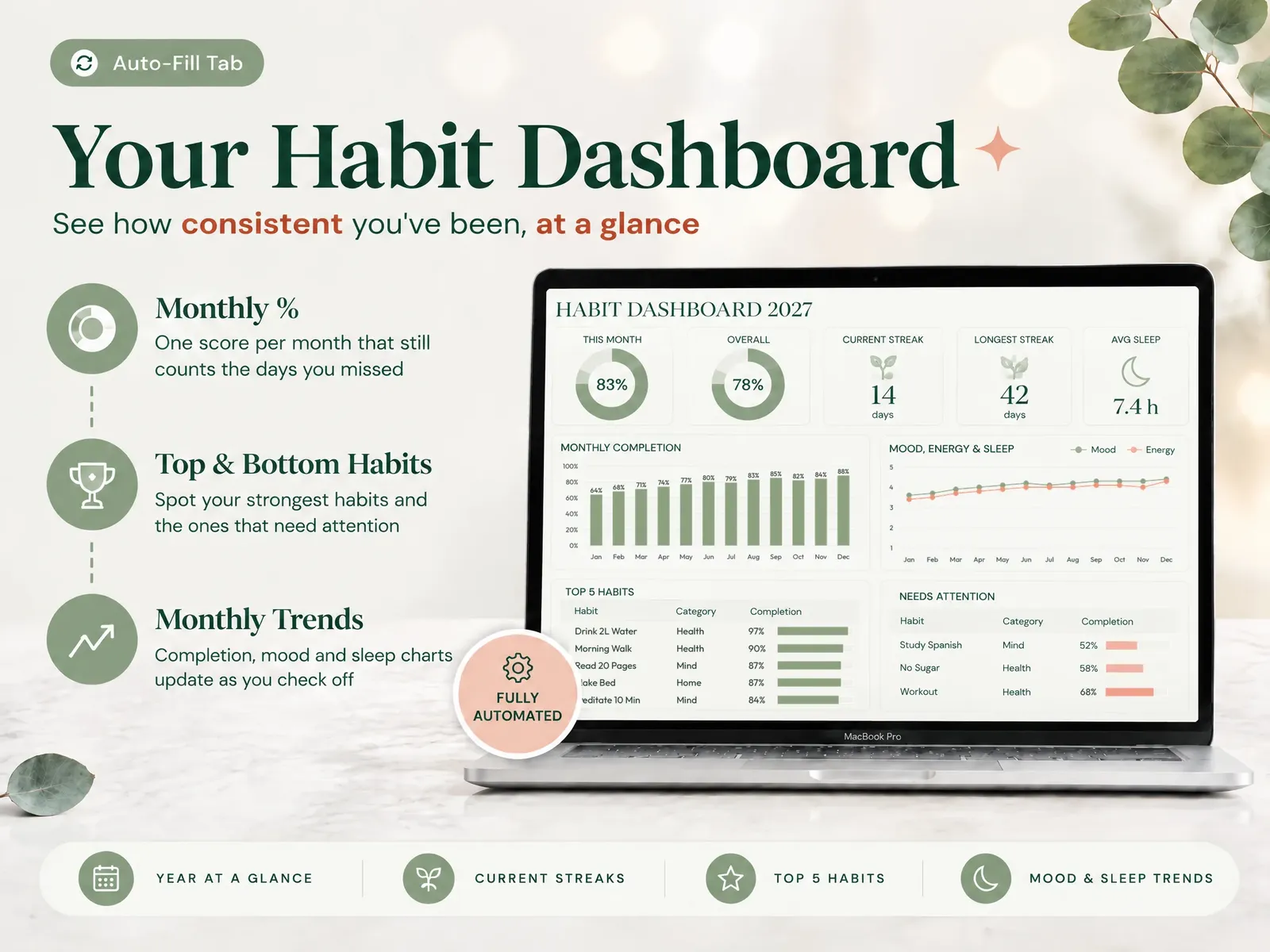
The Ultimate Habit Tracker is a spreadsheet for people who want to see both the month and the streak. It includes 12 monthly checkbox grids, a monthly percentage, Streaks & Comebacks, Habit Patterns, and a year in review. Excel and Google Sheets versions are included.
Its monthly percentage counts each day shown, and one missed day pauses a streak. Two misses in a row end it. A forgotten day can be filled in later, and comebacks are counted. That gives an empty day context while keeping the completed days visible.
The file has no reminders or notifications. You enter habits once in Setup, then check them off in the monthly grid. See the habit tracker spreadsheet and the spreadsheet features to decide whether a month view suits your routine. If you are building your own, start with the habit tracker spreadsheet guide or compare it with the habit tracker template checklist.
Frequently asked questions
What is the don't break the chain method?
It is a way to track a daily habit by marking each day you do it on a calendar. The marks form a visible chain of completed days. The chain can make showing up easy to see, though it does not explain what to do after a missed day.
What should I do if I break my habit streak?
Resume with the next planned opportunity and keep the missed day visible. You do not need to double the next session or restart the whole month. If the same obstacle returns, adjust the cue, timing or size of the habit.
Does one missed day ruin a habit?
One missed day does not erase the days you completed. In a study of everyday behaviors, [Lally and colleagues](https://doi.org/10.1002/ejsp.674) found that one missed opportunity did not materially affect the habit-forming process they measured. The study does not promise the same outcome for every habit.
Is never miss twice the same as don't break the chain?
No. Don't break the chain tracks consecutive completed days. Never miss twice is a recovery rule: try to return at the next opportunity after a miss. You can use both ideas while keeping the missed day visible.
Can I use a weekly habit instead of a daily chain?
Yes. Set the chain around the schedule the habit actually needs. If you plan to practice three times a week, mark those planned sessions rather than treating all seven days as a test.
How do I track progress after a missed day?
Keep the empty day in the calendar, then track completed days across the full period as well as any current streak. Those views answer different questions: the streak shows the current run, and the period score shows how much you did overall.
Sources
- Brad Isaac, Jerry Seinfeld's Productivity Secret, Lifehacker (2007)
- Lally, van Jaarsveld, Potts and Wardle (2010), How are habits formed: Modelling habit formation in the real world, European Journal of Social Psychology
- James Clear, The Ultimate Habit Tracker Guide
- James Clear, Avoid the Second Mistake
- British Psychological Society Research Digest, How long does it take to form a habit?
- Gardner, Lally and Wardle (2012), Making health habitual: the psychology of habit-formation and general practice, British Journal of General Practice
Keep reading
Habit Tracking
The Habit Loop Explained: Cue, Routine, Reward on One Tracked Habit
The habit loop is cue, routine, reward. See all three tracked in separate columns for one habit across a month, and what to do when a day goes missing.
· 8 min read
Habit Tracking
Habit Tracker Spreadsheet: How to Build One That Survives a Missed Day
Set up a habit tracker spreadsheet in Excel or Google Sheets that keeps counting after a missed day: the layout, formulas, streak rule and what to track.
· 9 min read
Habit Tracking
How to Track Habits in Google Sheets (Without Typing on Your Phone)
Habit tracker Google Sheets setup: a checkbox grid, a month score and a phone shortcut in four steps, plus what one missed day does to your streak.
· 8 min read
