How Many Habits Should You Track? Starter Sets by Goal (2026)
Choose a small set of habits to track by goal, define what counts, and adjust it when your week changes. Includes practical starter sets and a sample month.
By Ultimate Habit Tracker by Cosmo Suite · Editorial policy
Published · 7 min read

If you have a long list of habits to track, start with three that matter this week. Choose actions you can name clearly, then decide which days each one applies. You can add more after you have seen how the list fits an ordinary week.
There is no universal number that everyone should track. Three is a useful starting set, not a scientific limit. A short list makes it easier to see what you meant to do, what happened, and what you want to change.
Below are starter sets for common goals, a way to pick your own three, and a sample month that shows how a few blank boxes can still leave a useful record.
Start with three actions you want to see
Choose a few actions that matter to you now. A short list gives each one room on the page and makes the check-off easier to understand. You can always change the list when your priorities change.
Try this filter before adding an item:
- Would I care if I did this more often? Pick a current priority, not an idealized version of yourself.
- Can I say what counts? “Read one page” is easier to record than “be more thoughtful.”
- Can I name when it applies? “Walk after work on Monday and Thursday” has a clear schedule. A weekly goal should not be treated as a daily one.
If an action needs a number or a health target, use a reliable source for that target. For example, the CDC adult activity guidelines describe weekly activity recommendations, and the CDC's sleep guidance explains that sleep needs vary by age. A tracker can record a plan you chose; it cannot tell you what is medically right for you.
Habits to track at a Glance
Start with one action from a goal that matters, then add up to two others only if they fit your week. These are prompts, not a checklist to complete.
| If your goal is… | Possible habit to track | Make the check-off clear | Best for |
|---|---|---|---|
| Read more | Read a few pages after breakfast | Choose a page count before the week starts | A habit with an existing quiet moment |
| Move more | Take a walk on selected days | Set the days, not a perfect daily streak | A routine that changes by weekday |
| Wind down | Put your phone on its charger at a chosen time | Mark the action, not whether you slept well | A visible evening cue |
| Keep a journal | Write one line after lunch | One line is the planned action; more is optional | A habit that feels too big to begin |
| Prepare for tomorrow | Put one needed item by the door | Name the item or category in advance | A repeatable end-of-day action |
| Practice a skill | Open the lesson and complete one planned step | Define the step before you begin | A goal that can otherwise feel vague |
Pick a row that reflects your own goal. If the suggestion does not fit your schedule, use a different action. The point is to make the habit visible enough to record without adding a second project.

Build a starter set around one goal
You do not need one habit from every part of life. Start with a theme you care about, then choose actions that do not all compete for the same time or energy.
For a reading goal, a starter set might be “open the book after breakfast,” “read during a commute,” and “put the book beside the bed.” That may be too repetitive for some people. If so, track just the reading action and use the other two as cues or reminders you create for yourself, not extra rows.
For a movement goal, you might track a planned walk, a chosen class, or a home routine on specific days. The CDC's activity guidance is a source for activity recommendations; it does not mean every person should use the same tracker target. If you have a health condition or questions about what is appropriate, ask a qualified professional.
For a less distracted evening, you could track putting a phone in another room, closing work materials, or setting out something for the morning. Choose the action you can control. “Have a perfect night” is not a useful check-off because it does not tell you what to do.
Keep habits, outcomes and notes separate
A habit is an action you can repeat. An outcome is what you hope the action may support. A note is context that may help you understand a day. They can sit near each other, but one should not stand in for another.
For example, “take a walk after work” is an action. “Feel less tired” is an outcome that may have several causes. If you record energy or mood, treat it as a note about that day rather than proof that the walk caused a change. A tracker is a record, not a diagnosis or experiment unless you have a clear method for one.
Keep optional notes only when you plan to review them. If sleep is a concern, the CDC's sleep overview gives age-based guidance and points readers toward health support. A checkbox cannot replace that guidance.
A sample month with three habits
Imagine a fictional month with three planned actions: reading after breakfast, walking on selected weekdays, and putting a phone on its charger before bed. The reader records each action when it happens. The example below is illustrative, not a customer result or research finding.
Suppose the reading action happens on 22 of 30 days. That is 22 ÷ 30, or about 73% of the month. Suppose the walk is planned for 12 specific days and happens on 9 of them. That is 9 ÷ 12, or 75% of planned opportunities. The charger action happens on 20 of 30 days, or about 67%.
These percentages answer different questions because the schedules differ. Counting the walk against every calendar day would make planned rest days look like missed habits. Write down the target days first, then compare completed actions with the days that applied.
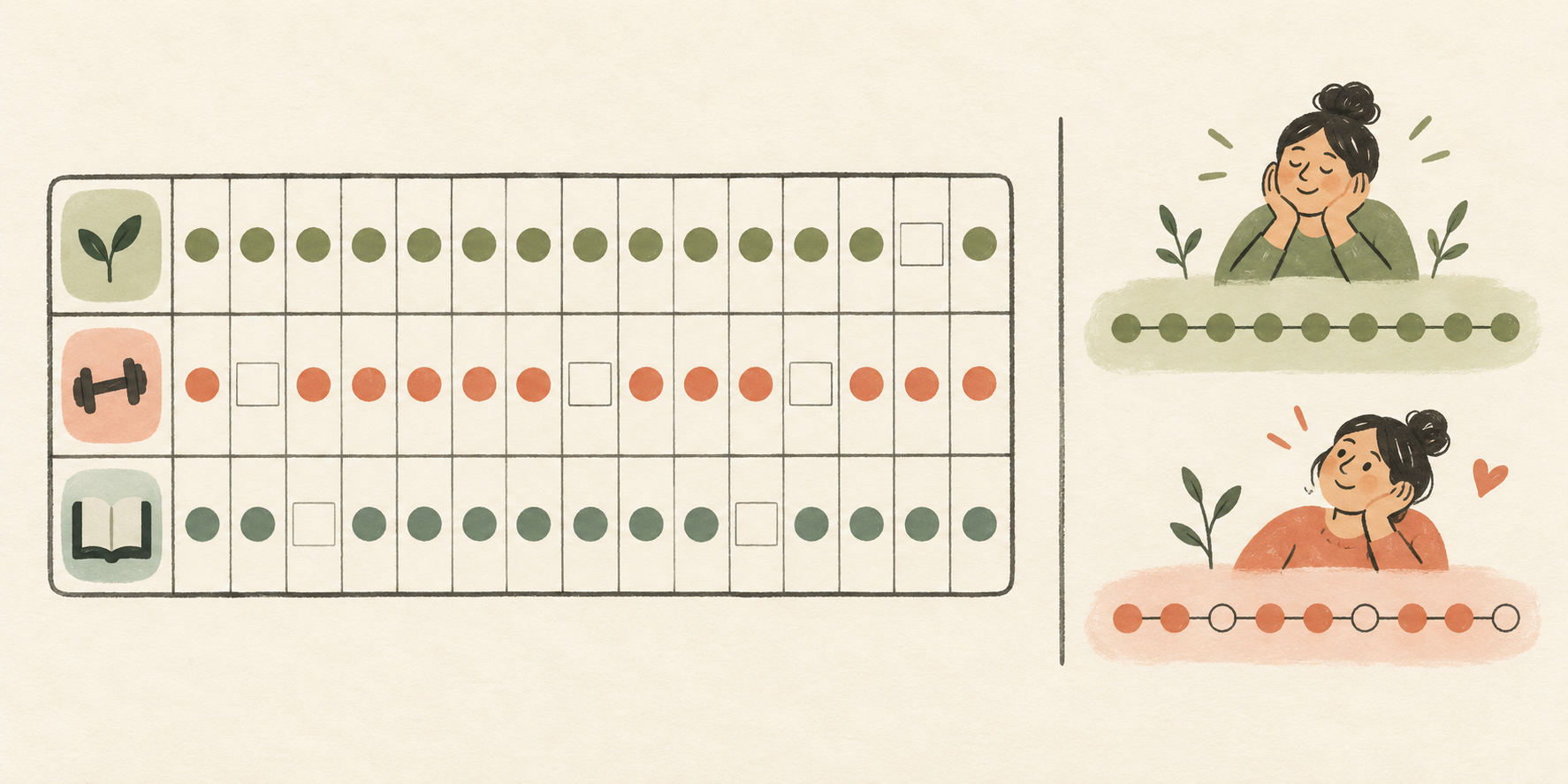
A month view can show both check-offs and gaps. It cannot tell you why a blank day happened. A short note such as “travel day” or “forgot the book” can help you decide whether to change the cue, the schedule or the action itself.
What makes the list easier to keep using
The best-sized list is one you can still record when the week is ordinary, busy or disrupted. If you stop checking it, reduce the friction before you blame the habit.
Use the smallest honest action. If “exercise” is hard to define, write the activity you chose and the planned days. If “read more” feels vague, pick a page count or a short reading window.
Leave space for real life. A weekly habit does not need a daily checkbox. If you expect a pause, make the schedule reflect it. An empty box can stay empty without erasing the days you completed.
Review the list, not your character. Ask whether the action was clear, whether the timing fit, and whether the check-off was easy to make. Change one part at a time. If a habit no longer matters, remove it.
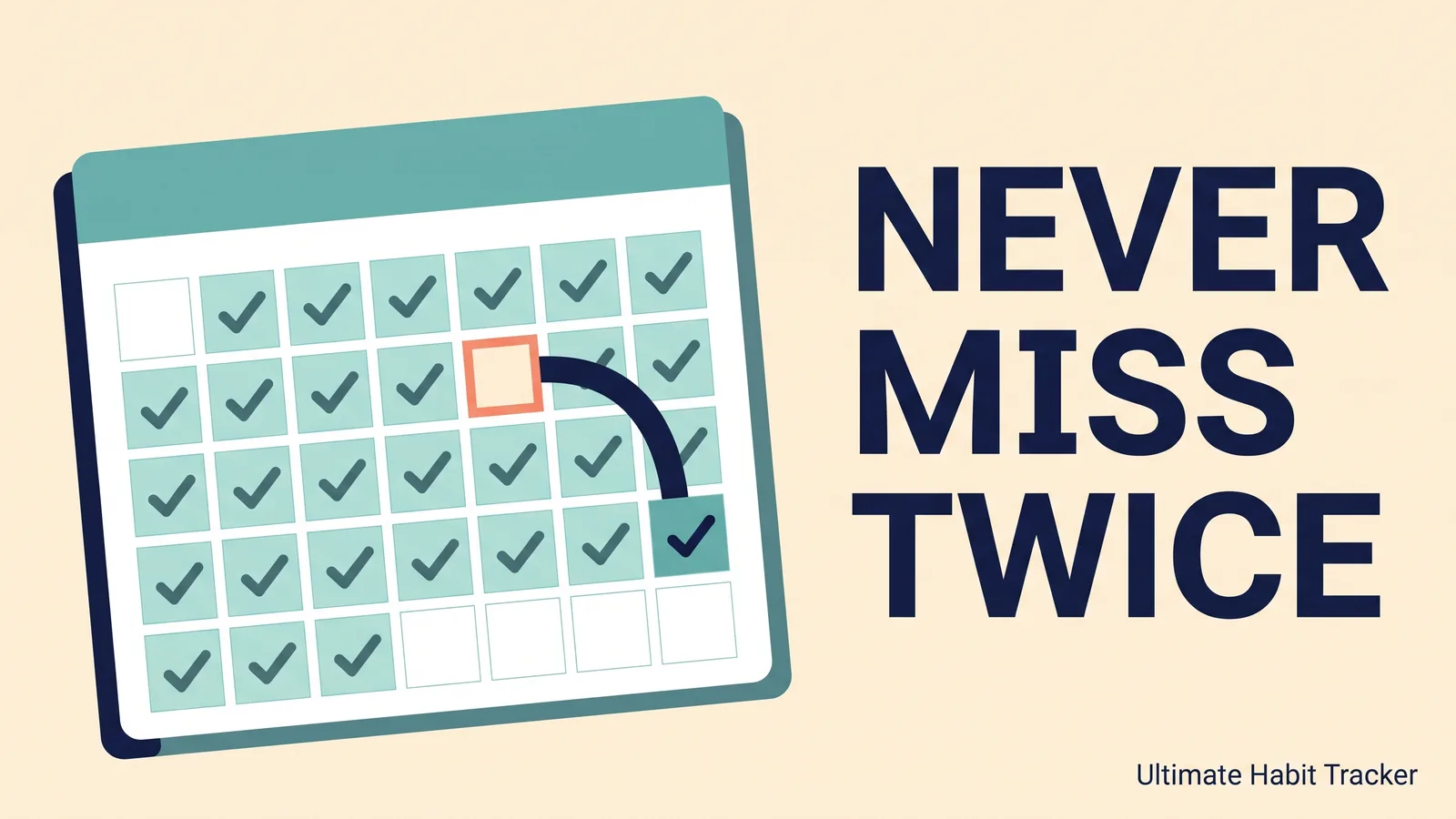
Keep a returning path. After a missed day, the next planned opportunity is a place to restart. The never-miss-twice guide explains one way to treat a missed day without letting it define the whole month.
Why Trust This Article
The example month uses fictional numbers and simple arithmetic. The activity and sleep links point to CDC guidance, checked on 31 October 2026. The Ultimate Habit Tracker is a spreadsheet made by Cosmo Suite, so this site is not independent when it discusses that product. Product details follow the approved contents list. This article is practical organization guidance, not medical advice. Read the editorial policy or contact the team with a correction.
Where the Ultimate Habit Tracker (ultimatehabittracker.site) fits
The Ultimate Habit Tracker is a spreadsheet for people who want to record habits in Excel or Google Sheets. Its Setup tab supports up to 25 habits, and the product guide suggests starting with three. You can also use the included 100 Habit Ideas list as a prompt, then choose only the actions that fit your current week.
The sheet includes monthly checkboxes, target days, a monthly percentage, streak and comeback views, and space for notes. One missed day pauses a streak; two missed days in a row end it. A forgotten day can be filled in later. It does not send reminders or notifications.
If you want to see the file before deciding, view the Ultimate Habit Tracker and its included tracker tabs and printables. The spreadsheet includes Excel and Google Sheets versions and costs $9 once according to its approved product information. It is built for Excel 365; older Excel versions may limit dashboards. Google Sheets requires a free Google account.
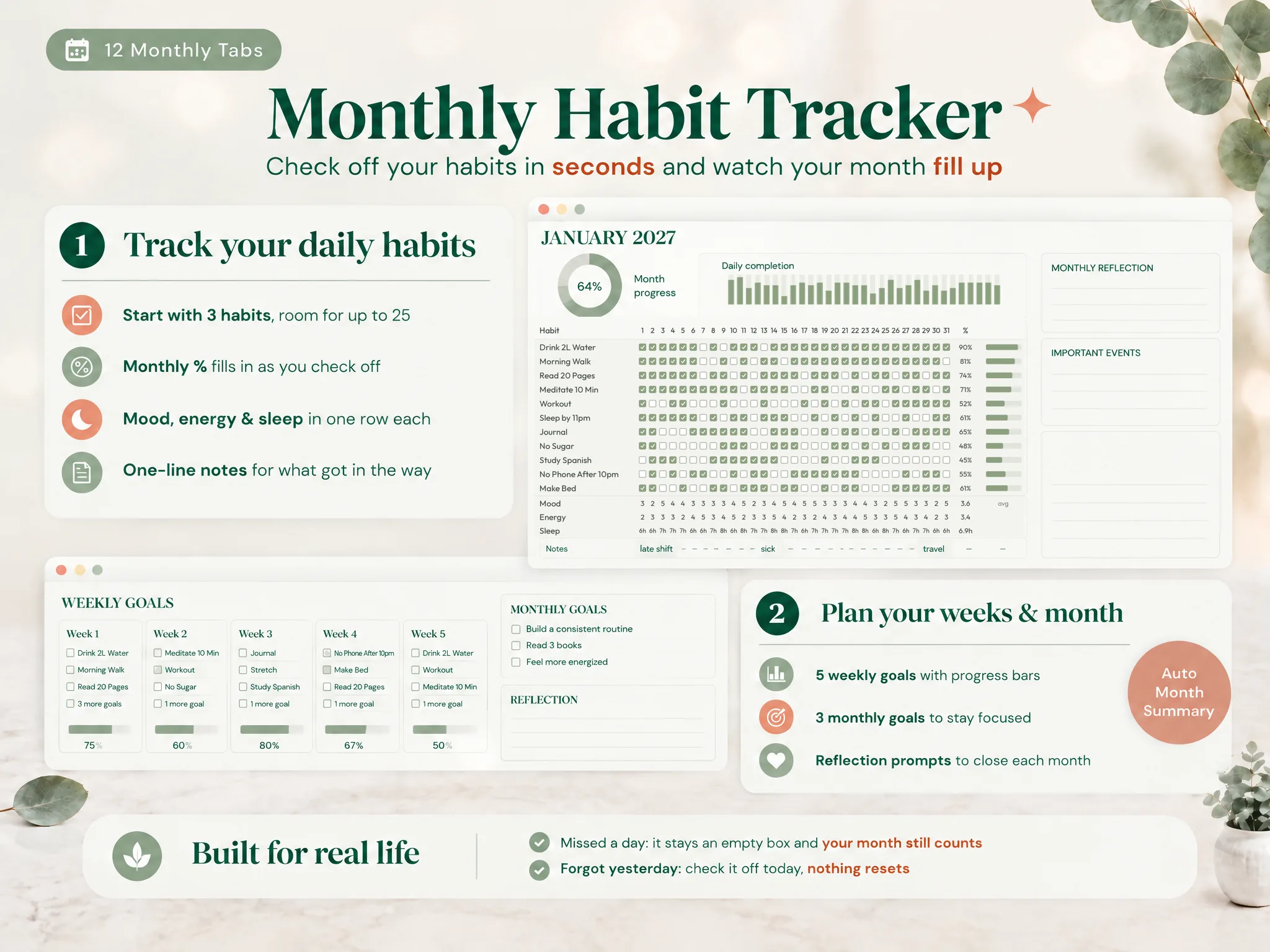
Start with the few actions you want to see. If your list stops fitting, change the list. A habit tracker should make your choices easier to review, not give you more boxes to manage.
Frequently asked questions
How many habits should I track at once?
There is no number that fits everyone. If you are unsure, choose three habits that matter now and are easy to define. Keep that set for a short review period, then add, remove or adjust an item based on how it fits your ordinary week.
What are good habits to track?
Pick actions you want to do more consistently, such as reading, walking, preparing for the next day or putting your phone away at a chosen time. Make each one specific enough to check off. For health goals, use guidance from a qualified source rather than treating a tracker as medical advice.
Should I track habits every day?
Only if daily tracking matches the plan. A weekly habit can have a weekly target, such as a walk on selected days. Set the schedule before you start so a planned rest day is not mistaken for a missed habit.
Should I track mood, sleep or energy too?
Track them only if the notes will help answer a question you care about. A simple check-in can show what happened on a day, but it does not explain why or diagnose a health condition. Keep optional context separate from the habits you are trying to repeat.
When should I add another habit?
Add one when the current list is easy to remember and record during a normal week. If the tracker feels like admin, reduce the list or simplify an action before adding more. You can change the set later.
What if I miss a day?
Leave the day blank or fill it in later if you remember what happened. A missed day does not erase earlier check-offs. Review whether the action, timing or cue needs to change, then return to the next planned opportunity.
What is the fastest way to start tracking habits?
Choose up to three actions, write the exact version that counts and decide which days each one applies. Put the tracker somewhere you will see it, record the action when it happens, and review the list after a week.
Sources
Keep reading
Habit Tracking
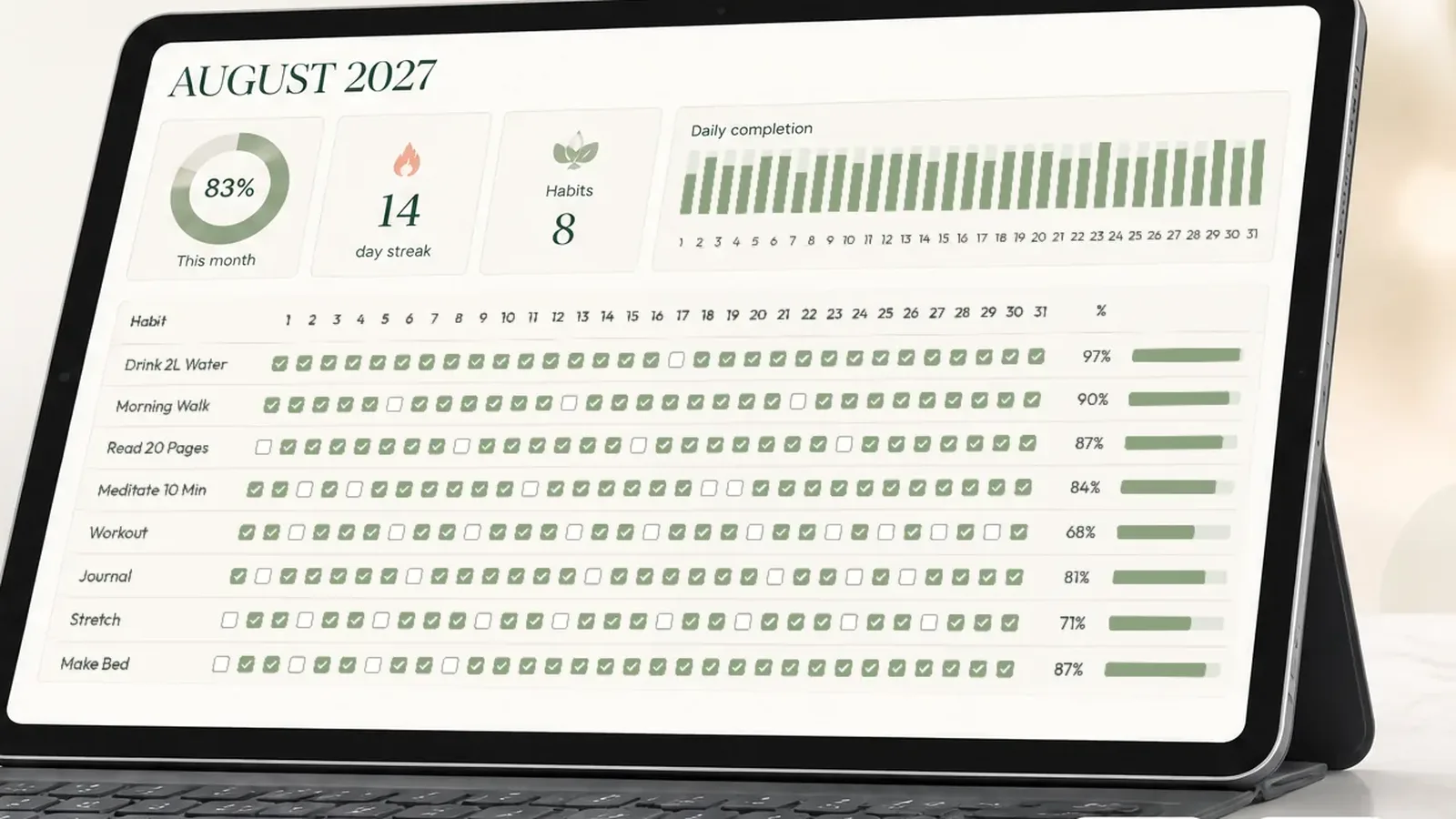
Habit Tracker Spreadsheet: How to Build One That Survives a Missed Day
Set up a habit tracker spreadsheet in Excel or Google Sheets that keeps counting after a missed day: the layout, formulas, streak rule and what to track.
· 9 min read
Habit Tracking
How to Use the Never Miss Twice Rule (Without Starting Over)
Never miss twice can help you restart after a missed session. Learn how to count planned opportunities, handle two misses in a row, and keep a monthly record.
· 8 min read
Habit Tracking
Habit Tracker Templates That Survive Week 3 (Matched to How You Track)
Habit tracker template checklist: 7 things a template needs to last past week 3, the formats compared on a missed day, and whether free or paid fits you.
· 8 min read
